
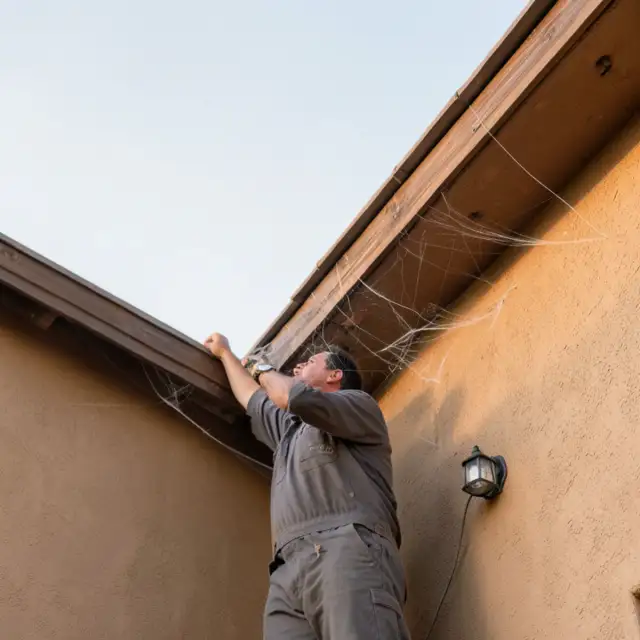
Spider Control in Tempe, AZ
Spider control in Tempe, AZ comes down to removing webs and hiding places and cutting the insects that feed spiders, because spraying a spider you cannot see does little. Kekoa Pest Control tells you which spiders matter and which are harmless, then treats accordingly.
- 5.0★ on Google (54 reviews)
- Family owned, owner operated
- Serving since 2022
Most spiders around a Tempe home are doing you a favor, and that is the first thing to get straight. They feed mainly on insects, and University of Arizona Extension points out how much worse the bug problem would be without them. A good bug exterminator separates the few spiders that need action from the many that only need moving out of your doorway.
Which spiders live around Tempe homes?
- Black widow. Glossy black female with an orange to red hourglass, in a messy, stiff web low and out of sight. This one needs its own attention, so see black widow control.
- Arizona brown spider. Tan front, gray rear, a dark violin mark and six eyes in a crescent. Nickel-sized with legs. Native to the desert, under wood and dead cacti, and active at night.
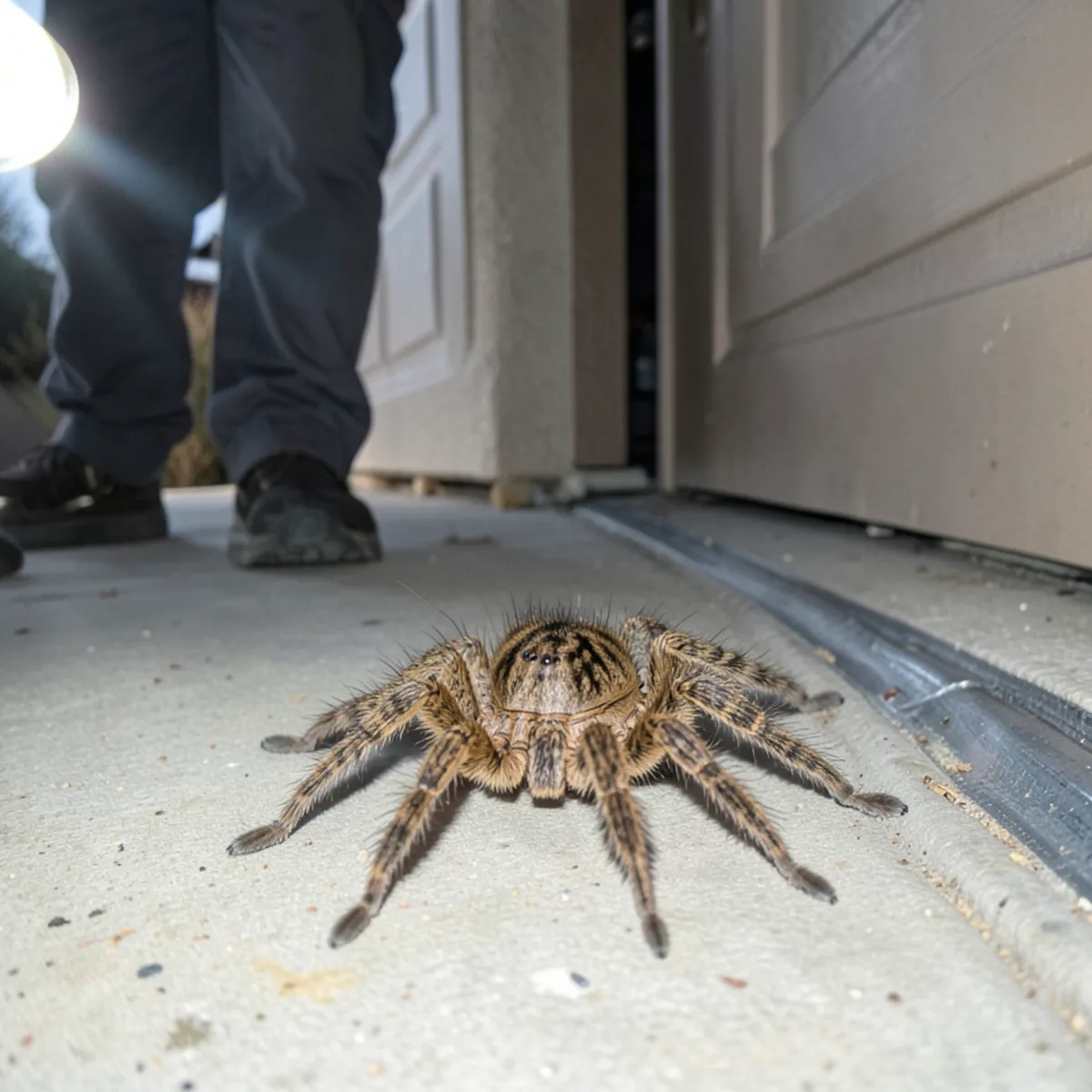
- Wolf spiders. Big, fast, mottled brown ground hunters that build no catching web. These are the ones that run across a garage floor.
- Orb weavers and other web builders. Round or sheet webs at eaves, shrubs and patio lights. Plenty to look at, with no real threat attached.
- Cellar spiders. Long thin legs and a loose web in quiet corners of garages and closets.
The dangerous group is small. Extension names two spiders that can cause serious medical problems here, and it notes spiders usually bite only when touched, trapped or threatened.
Is there a brown recluse problem in Arizona?
Not in the way people fear. University of Arizona Extension says the brown recluse is not a normal resident of Arizona, and the ones found here arrived in luggage or belongings. Most "recluse" sightings turn out to be another brown spider, or the native Arizona brown spider, its close relative.
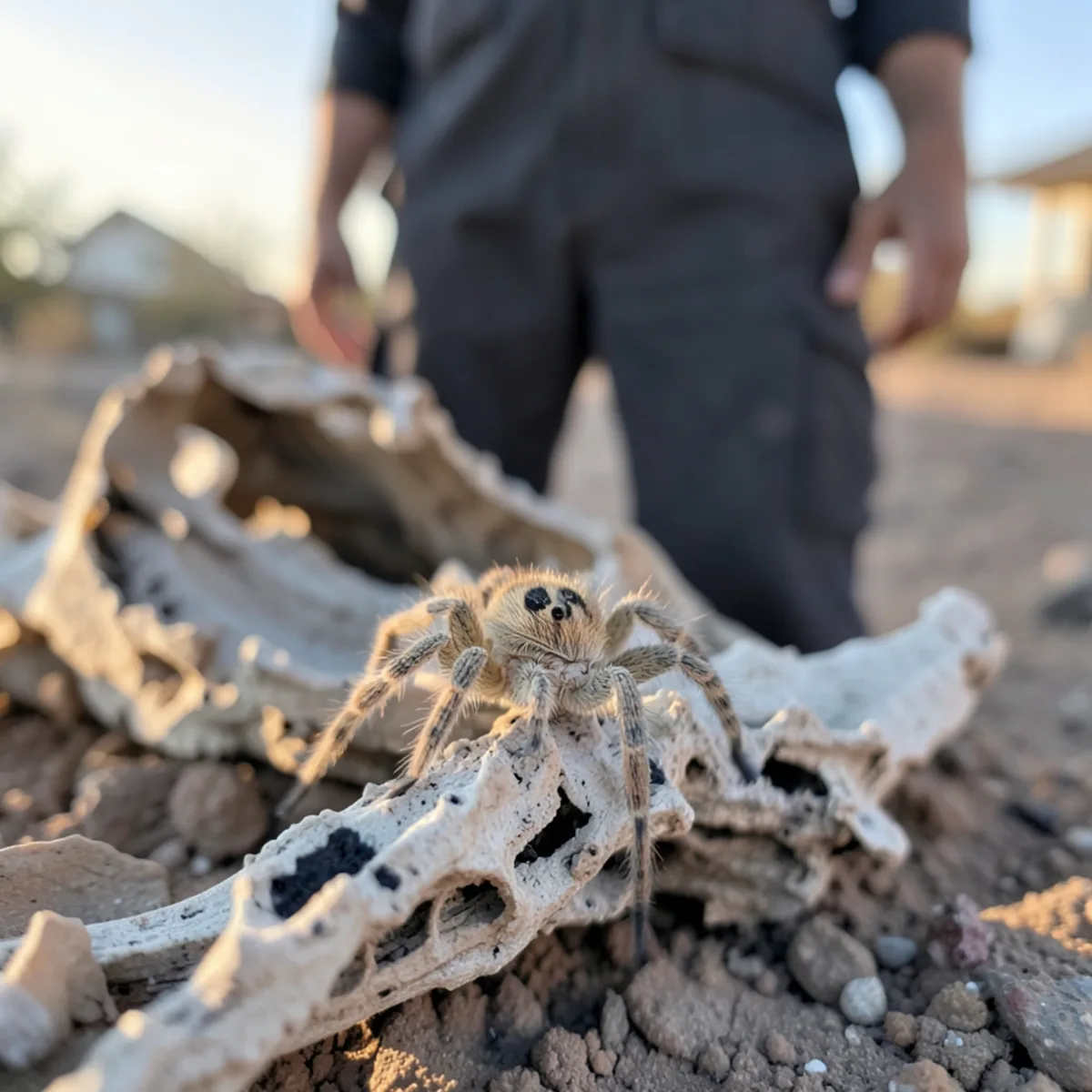
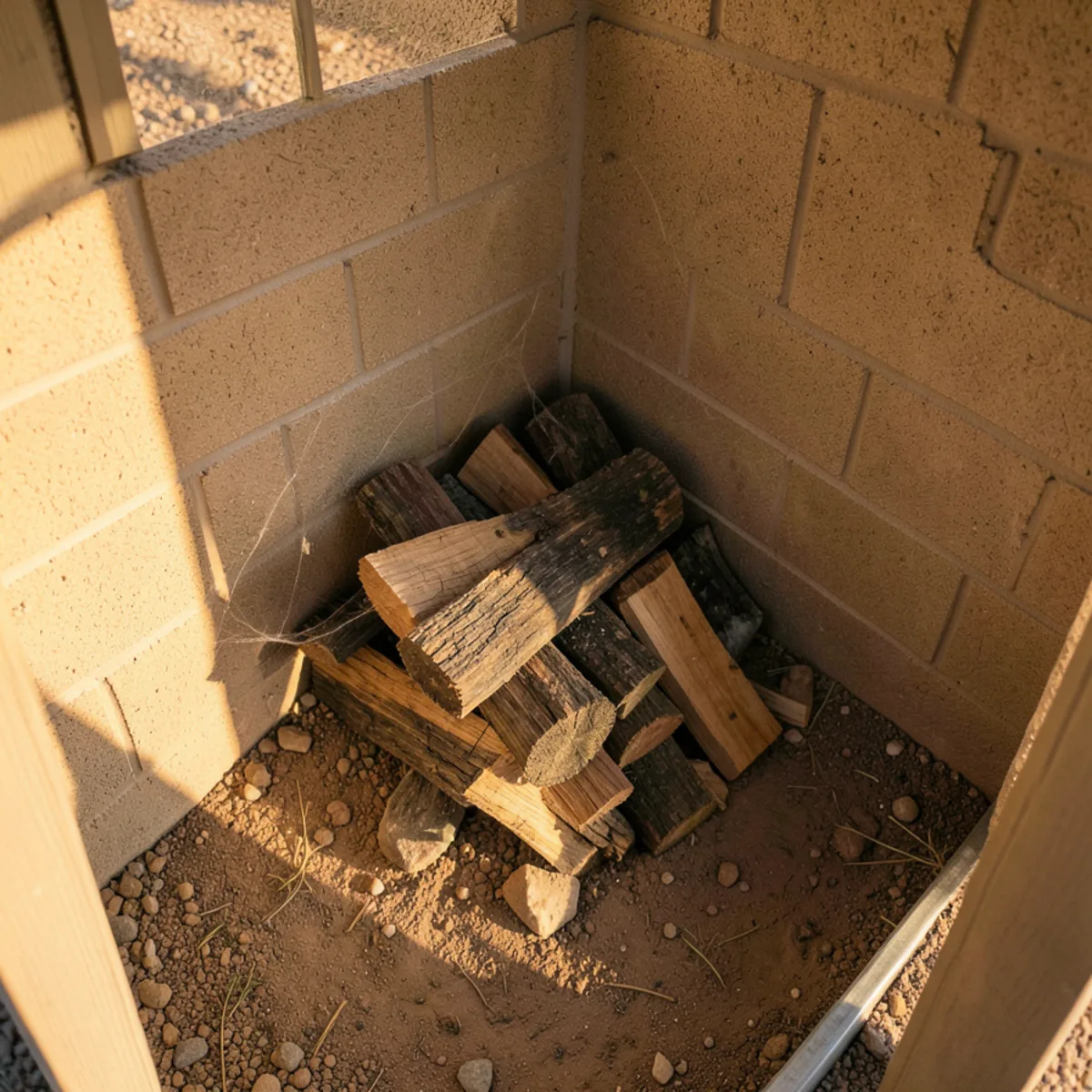
That relative still deserves care. Its bite can blister and ulcer, and the venom causes similar symptoms to the recluse. City yards usually get it from outside, on firewood or on cactus skeletons brought in as landscaping decor. Check those before you carry them near the house, and wear gloves when moving them.
What brings spiders to a Valley patio?
Food. Patio lights, garage lights and glowing windows pull in moths, crickets and beetles, and web builders settle right beside them. A late-summer cricket surge usually brings hunting spiders with it, which is why cricket control can shrink a spider problem too. Next comes shelter: block wall gaps, stored boxes, firewood, gravel edges, pool equipment covers and anything left undisturbed. Spider numbers follow insect numbers, so a home with an unsolved insect problem will keep its spiders.
Read what you find. Clean webs mean a spider is home, while dusty ones are old. Small sacs tucked in eave corners are next month's population. Fast spiders on a garage floor at night, with no webs nearby, point to wolf spiders and a ground-level insect supply.
What a spider treatment covers
Spider work is mostly mechanical, with chemistry used in small places. Kai starts by telling you what you have, since a cellar spider in a closet and a widow under a step do not get the same response. Then the webs go, along with the egg sacs in them. Treatment follows at cracks, voids and insect routes, where the label and the location allow it. The last piece is the food supply, because a home that keeps drawing insects to its lights keeps drawing spiders. Indoors the approach stays light, and a vacuum does most of it.
- A plain answer on which of your spiders are harmless.
- Web and egg sac removal at eaves, patios, garages and wall lines.
- Spot work at cracks, gaps and voids, not broad wall spraying.
- Checks of firewood, stored boxes, pool equipment covers and cactus skeletons.
- Lighting and storage notes that cut insects at the door.
- A separate plan if black widows are in the mix.
Spider control in Tempe, AZ: what works and what does not
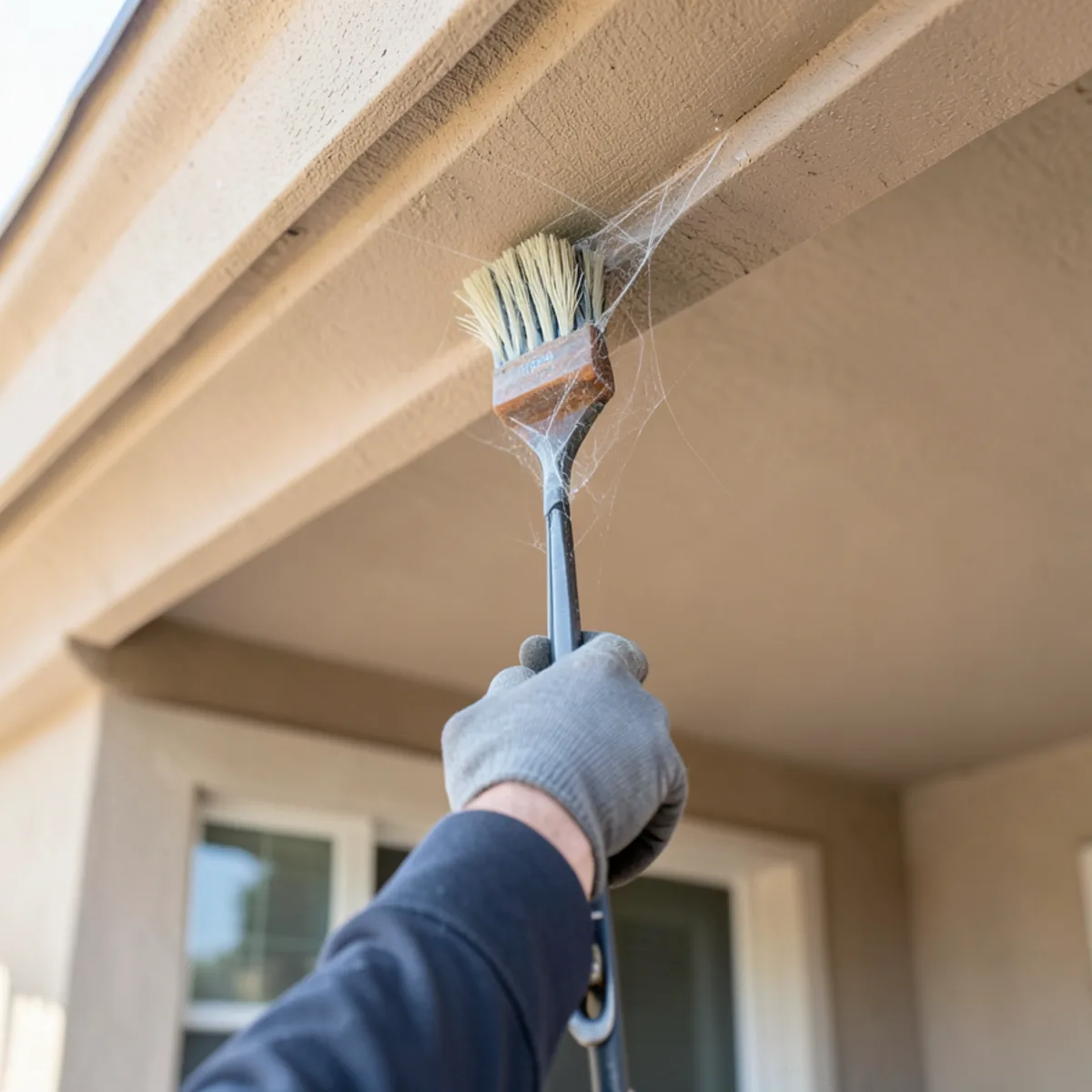
- De-webbing. A long-handled brush is the tool University of Arizona Extension recommends. It removes the web, the egg sac and often the spider, and it is the most visible improvement you can buy.
- Vacuuming. Spiders generally do not survive the trip through the hose. Good for corners, closets and garages. Dusty webs are usually old and empty, since occupied webs stay clean.
- Exterior spot treatment. Works when it hits the spider directly and in the spots insects travel. UC IPM is blunt that insecticides do not give long-term outdoor control by themselves.
- Dust in cracks and voids. Reaches attics and wall gaps out of sight, and it is applied by professionals.
- Reducing insects and clutter. The slowest option to arrange and the one that holds longest.
Walking through a spider visit
- Kai asks what you are seeing and where, and whether kids or pets use the area.
- He walks the eaves, patio, garage and wall lines, and looks at lights, stored items and firewood.
- He identifies what is actually there, including anything that needs extra care.
- He clears webs, then treats cracks and travel routes per the label, choosing spots kids and pets do not touch.
- He goes over lighting, storage and sealing changes that will keep the webs from returning as fast.
Webs do come back, particularly from spring through fall, since new spiders balloon and wander in. Expect a clear difference right away, then upkeep. Reviewers who want this handled regularly are on monthly service, and one is on every two months.
Prefer to write? Request a quote
Calling is fastest. If you are on a job or at work, leave your details and Kai will get back to you.
Costs for spider work depend on
- The length of eave, patio and wall line to be cleared.
- Height and access, including two-story eaves.
- Whether black widows or a large insect problem are part of the job.
- One clean-out versus regular visits.
A single-story Tempe ranch house and a two-story home with a wraparound patio are different jobs, because eave height sets how webs get reached. Block wall length matters, as does any pergola, shade structure or pool equipment pad collecting webs. Older yards with stored wood take longer to check. A home beside a lit common area or irrigated turf refills faster, which affects whether one clean-out is enough. Spring through fall is when webs rebuild, so the time of year you start changes the plan. Indoor work adds time too, since closets and attics get vacuumed or dusted differently from eaves, and a cricket surge has to be dealt with first.
What pesticide labels say about wall spraying
Federal labels limit the spray-everything habit. EPA's label language for outdoor pyrethroid and pyrethrin products keeps large treatments off structural areas above hard surfaces such as driveways, and it warns against letting product reach storm drains, gutters and ditches. That shapes spider work around a Valley home, where stucco meets concrete on most sides. UC IPM makes the other half of the point: product on a wall does not give long-term outdoor control anyway. A label also has to list the site and the pest. If anyone offers to fog the eaves and patio in one pass, ask to read the label first, and check that their written notice names spiders as the target pest.
Reasons to hand the webs to Kekoa
- Kai will tell you plainly if a spider is harmless, with no sales gimmick.
- He treats inside and out, and that includes garages and storage areas.
- He explains prevention at the visit, a point customers bring up in reviews.
- Kekoa has 5.0 stars from 54 Google reviews, checked November 2026.
- Reviewers mention a reminder the day before and an on-time arrival, so you can move patio furniture or pets first.
- Family owned and owner operated since 2022, so the webs, the notes and the follow-up all stay with one person.
- Weekday hours start at 6, which suits an early look at eaves before the heat builds.
Kai covers spider control in Gilbert, Scottsdale and Sun Lakes, along with homes around Tempe. If you are not sure what you are looking at, send a description when you call. He will tell you what he thinks before you book.
5.0★ from 54 Google reviews
What customers say about spider control with Kai
“We’ve been so impressed with our pest control service! Kai is always professional, punctual, and extremely knowledgeable. He takes time to explain what he’s doing and makes sure we understand how to prevent future issues.”
“Since working with him, we’ve seen a huge improvement—especially with eliminating scorpions from our yard. Highly recommend!”
“When we moved into our home, we had a scorpion infestation.These guys knocked it out in no time haven't seen a scorpion since! (With regular monthly service)”
Spider Control: common questions
Which Tempe spiders can really hurt you?
Two, for practical purposes: the black widow and the Arizona brown spider, according to University of Arizona Extension. Widows are common around Tempe homes, while the brown spider mostly lives in the desert under wood and dead cacti. Other local spiders can bite but are not considered a threat. For a suspected bite, the Poison Help line is 1-800-222-1222.
Is de-webbing the eaves worth doing?
Yes, it is one of the most useful things you can do. UC IPM puts webs and hiding places ahead of pesticides, and removing webs also removes egg sacs and the spiders living in them. Tempe eaves refill during warm months, so plan on repeating it. Pair it with fewer night lights, or the web builders move straight back.
Why do patio lights attract so many spiders?
The lights attract the insects, and spiders follow the food. Crickets, moths and beetles collect around a bright fixture after dark, and web builders set up right beside it at the eave. Switching off lights you do not need, or moving a fixture away from a door, cuts the web count faster than treating the wall under it.
Do we have brown recluse spiders in Arizona?
No breeding population to speak of. University of Arizona Extension says the brown recluse is not a normal resident, and the few found here hitched a ride in luggage or belongings. What people usually mean is the Arizona brown spider, a close relative with the same violin mark. It is timid, usually arrives on firewood or cactus skeletons, and deserves respect.
Are wolf spiders dangerous, and why are they in my house?
They are large and alarming to see, but they are not among the spiders Extension treats as a medical concern. Wolf spiders hunt on the ground at night and build no catching web, so they wander under doors. A vacuum and a good door sweep usually handle it. Treatment around the base of the house can help when numbers run high.
Where we offer this
- Rio VerdeGolf-side patios and quiet seasonal homes suit webs and black widows, with 27.5 percent of housing units listed vacant in 2020 and corners left undisturbed for months.
- TempeBlock walls and ASU-area patio lighting give web builders steady insects through the warm months.
- GilbertSeven recharge basins at Water Ranch produce flying insects that nearby patio lights can draw in.
- ScottsdaleHomes along the McDowell Sonoran Preserve sit near the dead cacti and wood Arizona brown spiders use.
- Sun LakesFairway irrigation beside patios feeds the insects that keep eaves webbed.
- Fountain HillsDark Sky status and four town washes make lighting the first spider fix to discuss.
- Cave CreekDesert Rural lots with firewood and cactus skeletons raise the odds of meeting an Arizona brown spider.
- Paradise ValleyOne-acre minimum lots mean long wall lines, outbuildings and eaves to clear.
- PhoenixAhwatukee homes beside South Mountain's 16,000 acres see wandering hunters that build no catching web.
Talk to Kai about spider control
Call first. You will reach the owner, not a call center.
Kekoa Pest Control, 2407 E Wesleyan Dr, Tempe, AZ 85282, (209) 563-1650
- 5.0★ on Google (54 reviews)
- Family owned, owner operated
- Serving since 2022