
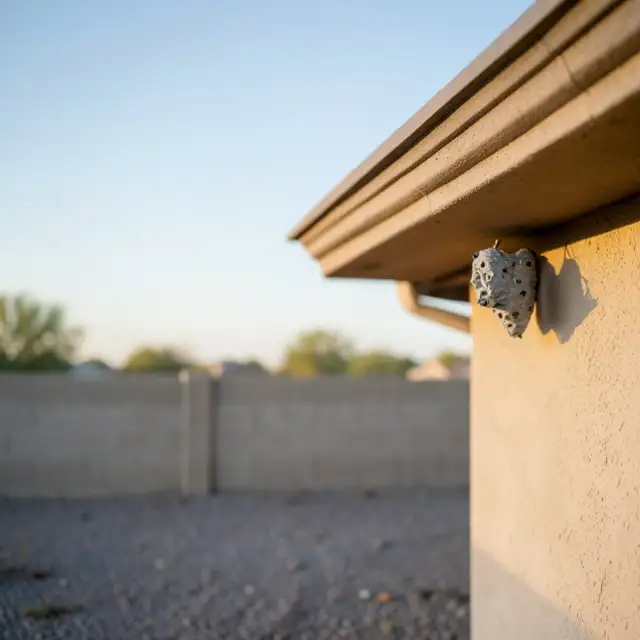
Bee & Wasp Removal in Tempe, AZ
Bee and wasp removal in Tempe, AZ starts with distance: keep people and pets back, leave the nest alone, and call (209) 563-1650. Kai will ask what you are seeing and where it is, then work out with you whether it sounds like a swarm, a colony or a wasp nest and what happens next.
- 5.0★ on Google (54 reviews)
- Family owned, owner operated
- Serving since 2022
A stinging insect problem comes down to three questions: what the insect is, where it is living, and who is at risk while it stays. Those answers decide everything else, including whether you need a visit at all. Some bees are passing through. Others have built comb inside a wall and will defend it.
What Bee and Wasp Removal in Tempe, AZ Covers
Kekoa's stinging insect work splits into four kinds of job, each with its own page:
- Bee removal in Tempe for swarms that have landed in the way and hives in walls, roofs and yard structures.
- Africanized bee removal for colonies that are acting defensive, and what to do if bees come after you.
- Wasp and hornet control for paper wasp nests under eaves, yellowjackets and other wasps near doors and patios.
- Meter box bee removal for bees in water meter, irrigation valve and utility boxes.
On any of these you get four things: the insect identified, the location of the nest or entry point, the removal or treatment itself, and a plain explanation of how to make that spot less attractive next time. Treatments follow label directions, and Kai will tell you what was used. Scope stops at the insects: stucco, drywall or tile repairs after a colony comes out may need another trade.
How Can You Tell Bees From Wasps at a Distance?
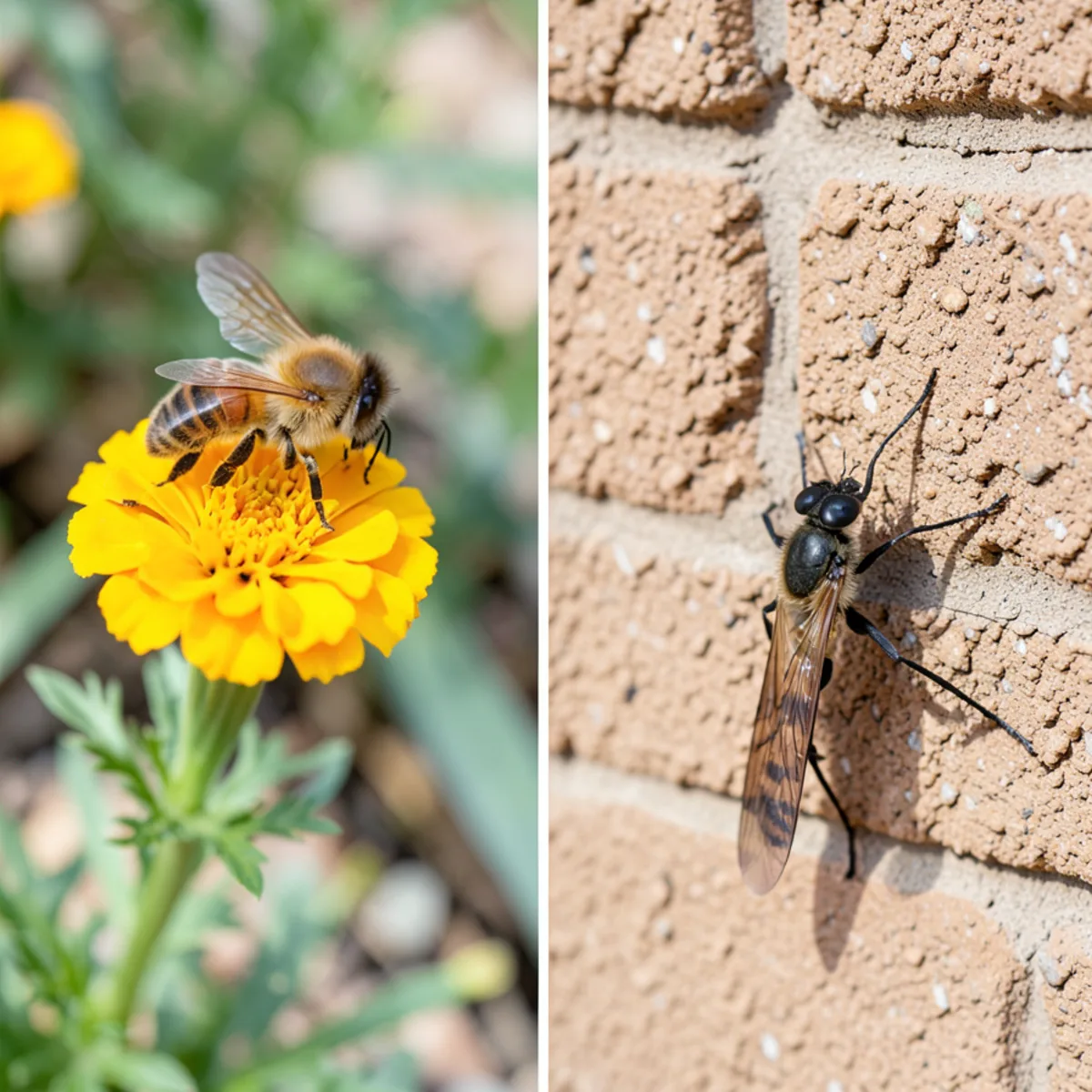
You do not need to get close, and you should not. University of Arizona Extension suggests identifying from a safe vantage point, with close-focus binoculars if you have them. Its comparison table comes down to this:
| What to look for | Honey bee | Paper wasp | Yellowjacket |
|---|---|---|---|
| Body | Robust, amber to dark brown, densely hairy | Long and slender with a thin waist, smooth | Stout, smooth, jagged yellow and black |
| Legs in flight | Held close to the body | Long, yellow, dangling | Held up, moving side to side before landing |
| Length | About 1/2 to 3/4 inch | About 1 to 1 1/4 inches | About 1/2 to 1 inch |
| Sting | Once, stinger stays in the skin | Can sting multiple times | Can sting multiple times |
The home tells you as much as the insect. Gray paper comb hanging in the open means wasps. A hole in a wall or box with a steady stream of insects could be honey bees or ground-nesting yellowjackets, and that is a reason to stay back and call.
Swarm, Colony or Nest: Three Different Jobs
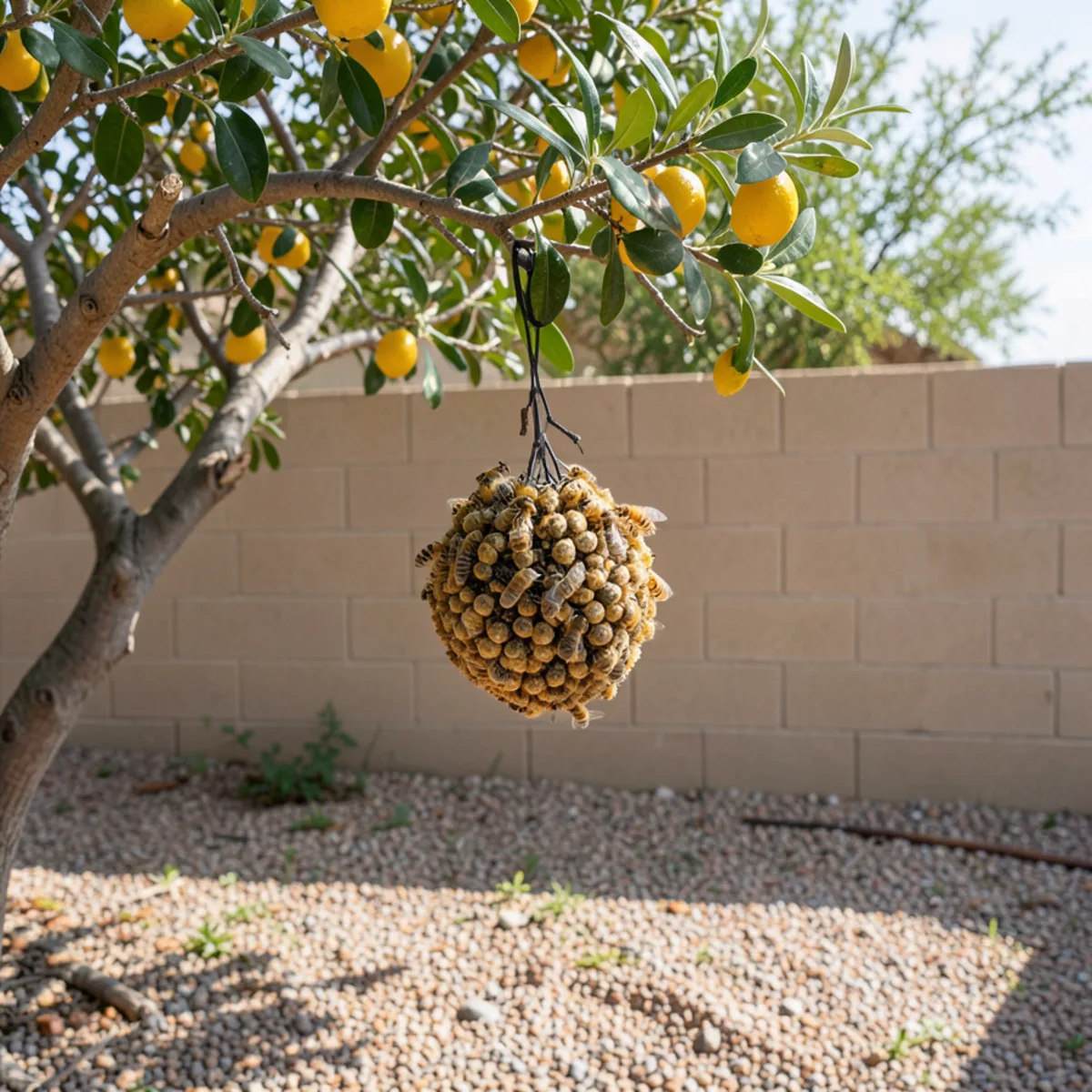
A resting swarm is a cluster that appears suddenly on a branch, fence or wall. Those bees have no brood to protect and are generally docile, though they can sting if disturbed. Extension says swarms usually move on within 24 to 72 hours, so one in a low-traffic spot may only need taping off. One blocking a doorway or walkway may need removing.
An established colony shows as many bees passing in and out of a cavity. Once a colony is rearing brood, the workers turn protective, and Extension says the chance of stings is much higher. Every wild honey bee in Arizona is treated as Africanized to some extent, which is why a colony by a door, pool or play area deserves a prompt call.
A wasp nest is usually a smaller job, and a seasonal one. Neither paper wasps nor yellowjackets reuse a nest after its first year. Extension's view is that a nest away from daily traffic can be left for the season, while one by a doorway or outdoor living area should come down.
Prefer to write? Request a quote
Calling is fastest. If you are on a job or at work, leave your details and Kai will get back to you.
Why Not Knock It Down Yourself?
Because the common home fixes are the ones that start trouble. Extension's rule for honey bee colonies is blunt: never shoot at them, or throw water, rocks, gasoline or other chemicals at them, and do not try to remove a colony yourself. The City of Mesa gives the same warning about throwing objects at a swarm or spraying it with water.
Bees also react to things you might not connect with them. Extension lists the sound and vibration of landscaping equipment, blowing dust, gasoline and paint thinner smells, and some hair sprays. So hold off on the mower, blower and string trimmer near a suspected colony until someone has looked at it.
How a Bee or Wasp Visit Works
- Call first. Say what you see, where it is and how close it sits to doors, pets and neighbors. If anyone is being stung, call 911 before anything else.
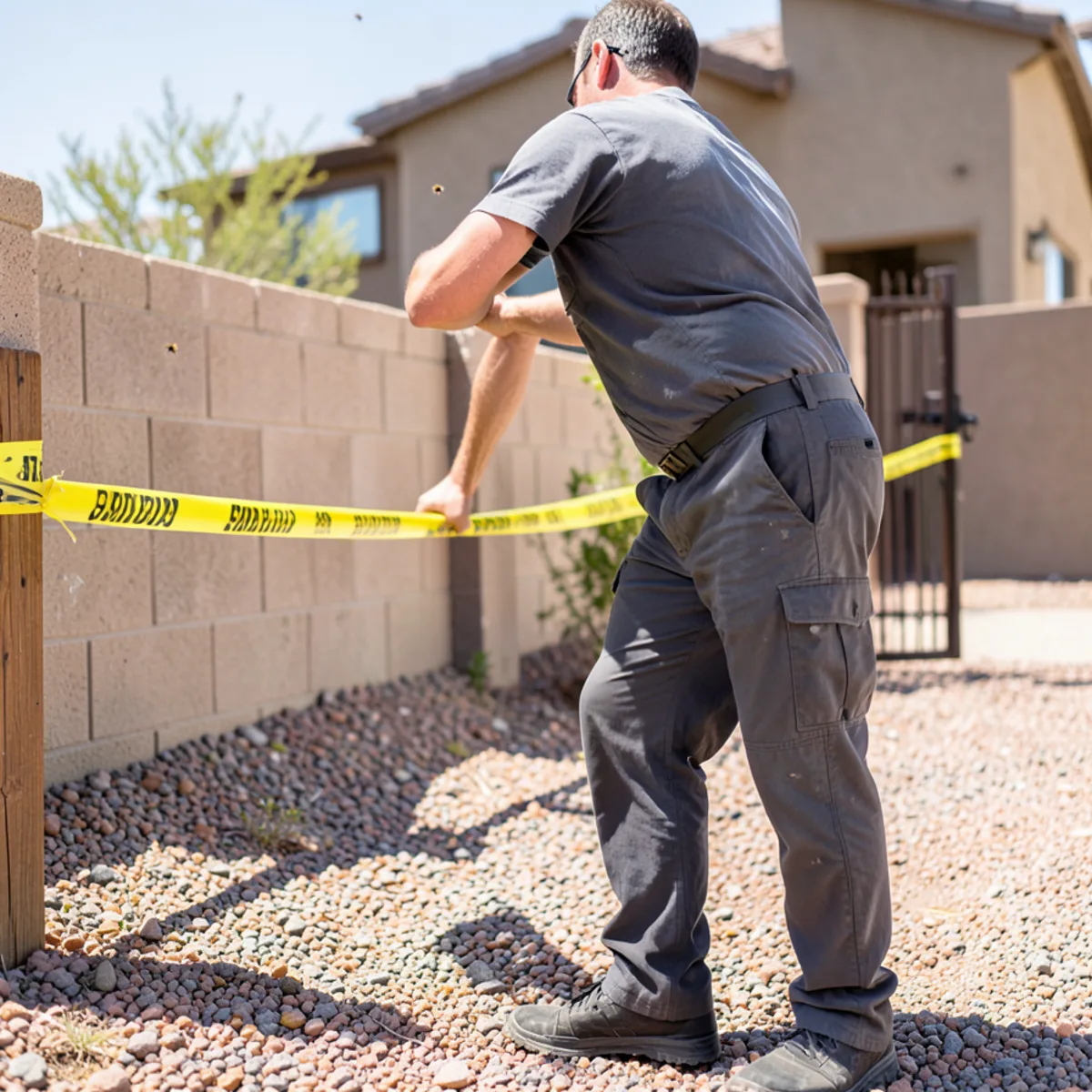
- Keep the area clear. From inside, close nearby windows and doors and keep kids and dogs in. Never walk toward the bees to rope anything off.
- Identification. Kai confirms the insect and traces the nest or entry point. Reviewers mention a day-before reminder and punctual arrival, so you can plan around him.
- Options explained. You hear what is possible for that location, what access is needed and what each route involves.
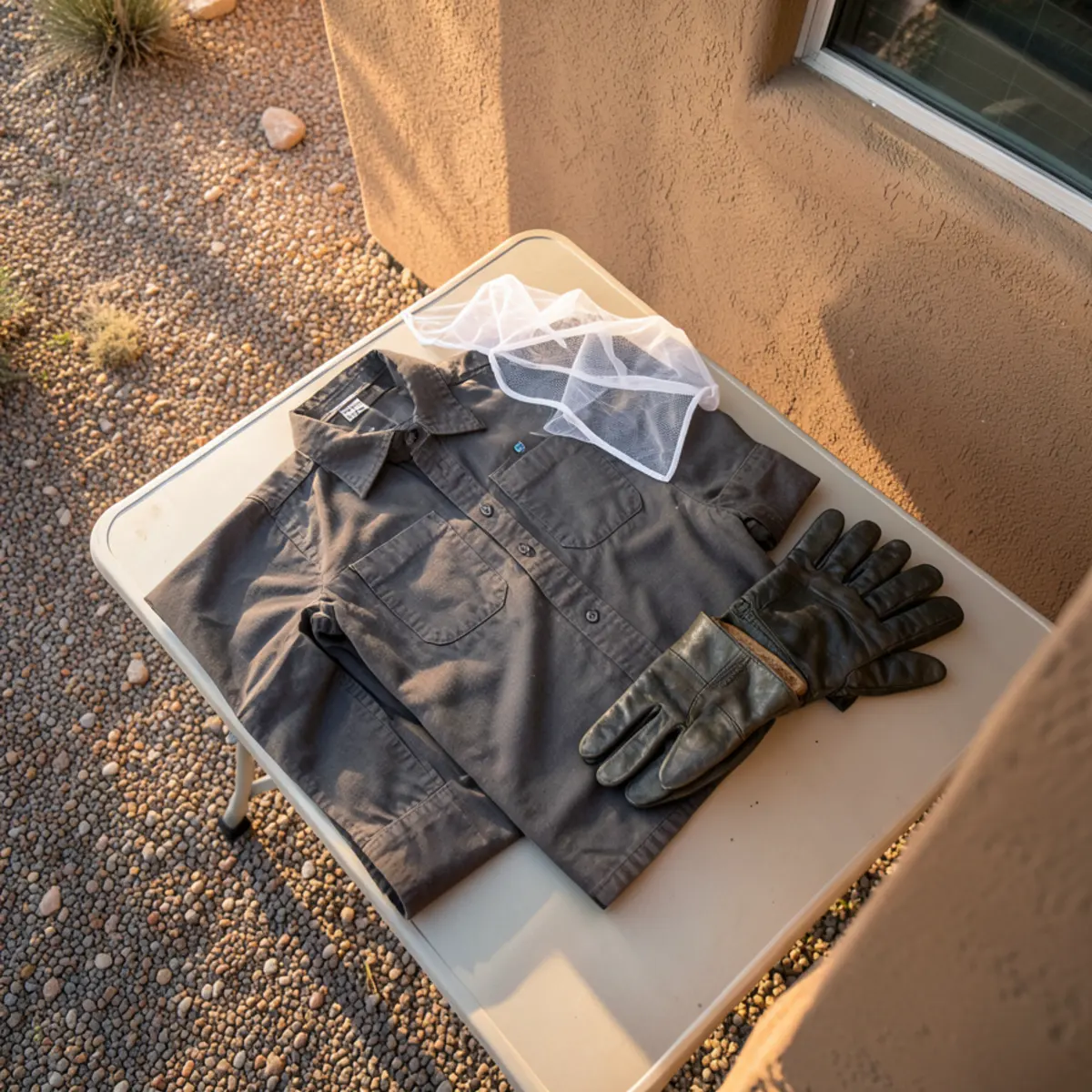
- The work. Removal or treatment goes ahead in protective gear, with label directions followed.
- Clean-up and prevention. After a colony comes out, the cavity should be cleaned and the entrance sealed, or new swarms will use it again. Kai will tell you what that spot needs, since a good home site tends to attract the next insect.
What Affects the Cost of a Bee or Wasp Job?
Kekoa does not publish a flat rate, because these jobs vary too much for one number to mean anything. The price depends on:
- The insect, and whether this is a swarm, a colony or a wasp nest.
- Height and access: ground level, a ladder job, or a tile roof.
- Whether comb sits inside a wall, roof or box and has to be reached.
- How big the colony is and how long it has been there.
- Any clean-up and sealing the spot needs afterward.
- How many nests are on the property.
Tempe's housing moves these factors around. A paper wasp nest on a single-story eave is a short job. A colony behind a block wall or under concrete tile takes longer, because reaching the comb is the work.
A good description by phone lets Kai narrow it down before making the drive.
Who Answers for a Hive: Owner, City or County?
On private land it is normally the owner. Maricopa County Vector Control says it investigates feral bee complaints to find the responsible party, and it tells people with a swarm or colony on their property to call a pest control company. The county's department is not an emergency responder, so an attack is a 911 call. Renters should go to the landlord first, per the county's bee brochure. Cities draw their own lines, as Mesa does for meters, parks and city land, so ask yours about public ground.
Why Kekoa for Stinging Insects
- You deal with the owner. One Google reviewer calls Kekoa "a one man show", which means the person who hears your problem is the person who shows up.
- The ratings are public. Google shows 5.0 across 54 reviews and Yelp shows 5.0 across 8, last checked November 2, 2026.
- The wasp work is on record. A long-time monthly customer mentions hornet abatement on a few occasions in a Google review.
- You get the explanation. Reviewers like that Kai walks them through the work and what would stop a repeat.
- No hard sell. Kekoa's own description says "No sales gimmick". A swarm that can be left alone should be left alone.
A note for anyone comparing companies: state law (A.A.C. R3-8-201) has pest management businesses licensed through the Arizona Department of Agriculture Pest Management Division. Any company can be looked up at opm.azda.gov/PCBusSearch.php.
Bee and Wasp Service Around the Valley
Kai works from the Wesleyan Drive base in Tempe, and bee control across the East Valley is a short drive from there. That includes Mesa, Chandler and Gilbert, plus Scottsdale and Phoenix. Hours are Monday to Friday 6 to 5 and Saturday 8 to noon. Call and Kai will give you an honest answer about when he can get there.
5.0★ from 54 Google reviews
What customers say about bee & wasp removal with Kai
“He responds to emergency situations immediately! And the best part of working with Kai is that he is the most genuine, friendly and competent contractor we have worked with in our 18 years in Sun Lakes!”
“I was experiencing cockroaches in my new home and they were here the next day. Very professional and quick service”
“We have had monthly pest control services which have kept the scorpions and other bugs away, as well as mice and hornet abatement on a few occasions.”
Bee & Wasp Removal: common questions
Are bees removed or exterminated?
It depends on where the bees are and who is at risk. Kai removes or treats colonies and explains which applies before work starts. Kekoa does not promise live relocation, so say on the first call if saving the bees matters to you. University of Arizona Extension also points residents to the Arizona Beekeepers Association, whose list names people who may collect bees.
Can I use a hardware store spray on a nest?
Leave bees alone entirely. University of Arizona Extension says it does not recommend pesticide sprays on bee swarms or colonies, and warns that some pesticides and petroleum products irritate honey bees. Wasp nests near a doorway are a different job, but ladders and angry wasps are a poor mix. A call to (209) 563-1650 costs you nothing but a few minutes.
Do you handle hives inside walls?
Yes, bee removal includes colonies living in wall voids, and Tempe's hollow block walls and stucco homes both give bees room. Getting at comb can mean opening part of the structure, so Kai will look at the entry point and tell you what access the job needs. The cavity should be cleaned out and sealed afterward, or a new swarm can move in.
What should I do if a swarm shows up on a Sunday?
Kekoa is closed Sundays, and a swarm in a quiet spot can usually wait. Keep people and pets away, close nearby doors and windows, and call Monday from 6 a.m. Extension says most swarms move within 24 to 72 hours. If bees are stinging or chasing anyone, call 911 at any hour. Saturday hours run from 8 to noon.
Who handles bees on city property?
The city often does, and it varies by city. Mesa lists its own numbers for bees on city-owned land, in parks and at water meters, while bees on private property are left to the owner or occupant to hire out and pay for. If you live elsewhere in the East Valley, ask your city or water provider before assuming it is your bill.
Is a bee at my pool a reason to call?
Usually not. University of Arizona Extension says most honey bees seen in a landscape are foragers from established colonies, out looking for water, nectar or pollen, and single bees are generally not a concern unless someone has an allergy. Steady traffic in and out of one hole is different. That points to a colony nearby, and it is worth a call.
Related services
- Bee RemovalSwarms in the way and hives in walls or roofs, handled by the owner.
- Africanized Bee RemovalDefensive colonies near homes, with clear advice on staying out of range.
- Wasp & Hornet ControlPaper wasp and yellowjacket nests cleared from doors, eaves and patios.
- Meter Box Bee RemovalBees out of meter, valve and irrigation boxes, plus how to keep them out.
Where we offer this
- TempeBlock walls, stucco and tile roofs give bees and wasps steady shelter close to the Wesleyan Drive base.
- MesaCity lines cover meters, parks and city land, so a hive on private ground falls to the owner.
- ChandlerHomes from the long building boom carry the block walls and patio covers bees and paper wasps both use.
- GilbertWater at the Riparian Preserve and along the Eastern and Consolidated canals keeps foraging bees near homes.
- ScottsdaleIrrigated paths and lakes along the Indian Bend Wash Greenbelt give stinging insects water through central Scottsdale.
- PhoenixMature Arcadia citrus gives swarms low branches to rest on, close to doors and patios.
- Sun LakesWatered fairways hold insects through dry months, and a local reviewer reports an immediate emergency response.
- GuadalupeAbout 1,820 housing units per square mile means a colony quickly becomes the neighbors' concern too.
- Fountain HillsSheltered eaves and patio covers on hillside lots suit paper wasps, so report nests while they are small.
Talk to Kai about bee & wasp removal
Call first. You will reach the owner, not a call center.
Kekoa Pest Control, 2407 E Wesleyan Dr, Tempe, AZ 85282, (209) 563-1650
- 5.0★ on Google (54 reviews)
- Family owned, owner operated
- Serving since 2022