
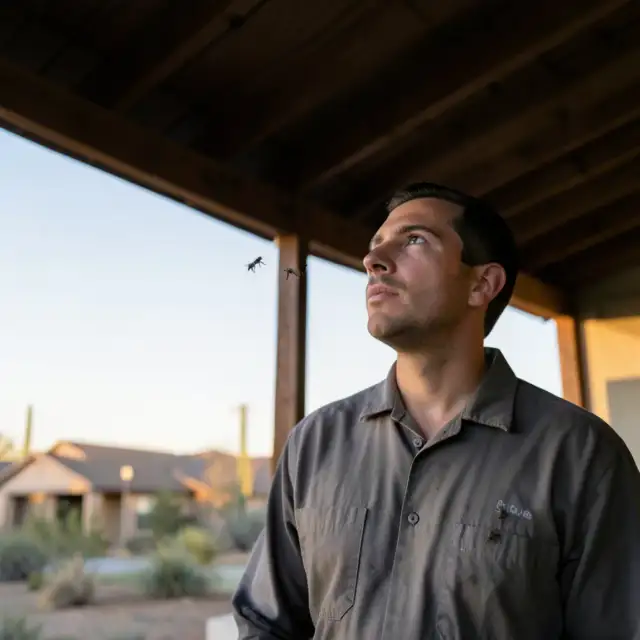
Wasp & Hornet Control in Tempe, AZ
Wasp control in Tempe, AZ is mostly about one question: is this nest somewhere people walk? Nests by doors, patios and pool gates should come down, while one far from daily traffic may be fine to leave. Call (209) 563-1650 and Kai will tell you which yours sounds like.
- 5.0★ on Google (54 reviews)
- Family owned, owner operated
- Serving since 2022
Wasps are the more routine half of bee and wasp removal, and usually the quicker one. They still sting. Unlike a honey bee, a paper wasp or yellowjacket can sting more than once, and a nest at the back door means someone is going to walk into that range sooner or later.
Wasp Control in Tempe, AZ: Where Nests Show Up
Arizona homes offer wasps plenty of shade and shelter. These are the spots worth a look from well back:
- Under eaves, soffits and patio covers.
- Inside light fixtures, gate frames and meter enclosures.
- On block wall caps, shade sails and play sets.
- Under the lid of a grill or in a stored umbrella.
- In the soil at the edge of gravel beds, for yellowjackets.
Signs you have a nest close by include wasps circling one corner at dusk, a gray papery comb, or several wasps drinking at the pool edge and flying off the same way each time. Tempe's heat drives that last one, since pools and dripping hose bibs are the easy water in summer. Nests also grow through the warm months, so a few wasps in April can be a stream by July.
What Wasp and Hornet Control Includes
A wasp visit is built around getting a door or patio back in use. It covers:
- Naming the insect, because paper wasps, yellowjackets and mud daubers call for different handling.
- A look along eaves, patio covers, gates and soil edges for a second nest.
- Treatment of active nests, following label directions.
- Taking down the nest and washing the spot.
- A note of what was used and where.
- Advice on which spots to watch for the rest of the season.
A nest on a neighbor's property needs that neighbor's say-so first. If the insects turn out to be honey bees, the plan changes, because that is a different job.
Paper Wasps in Arizona: Useful Until They Are by the Door
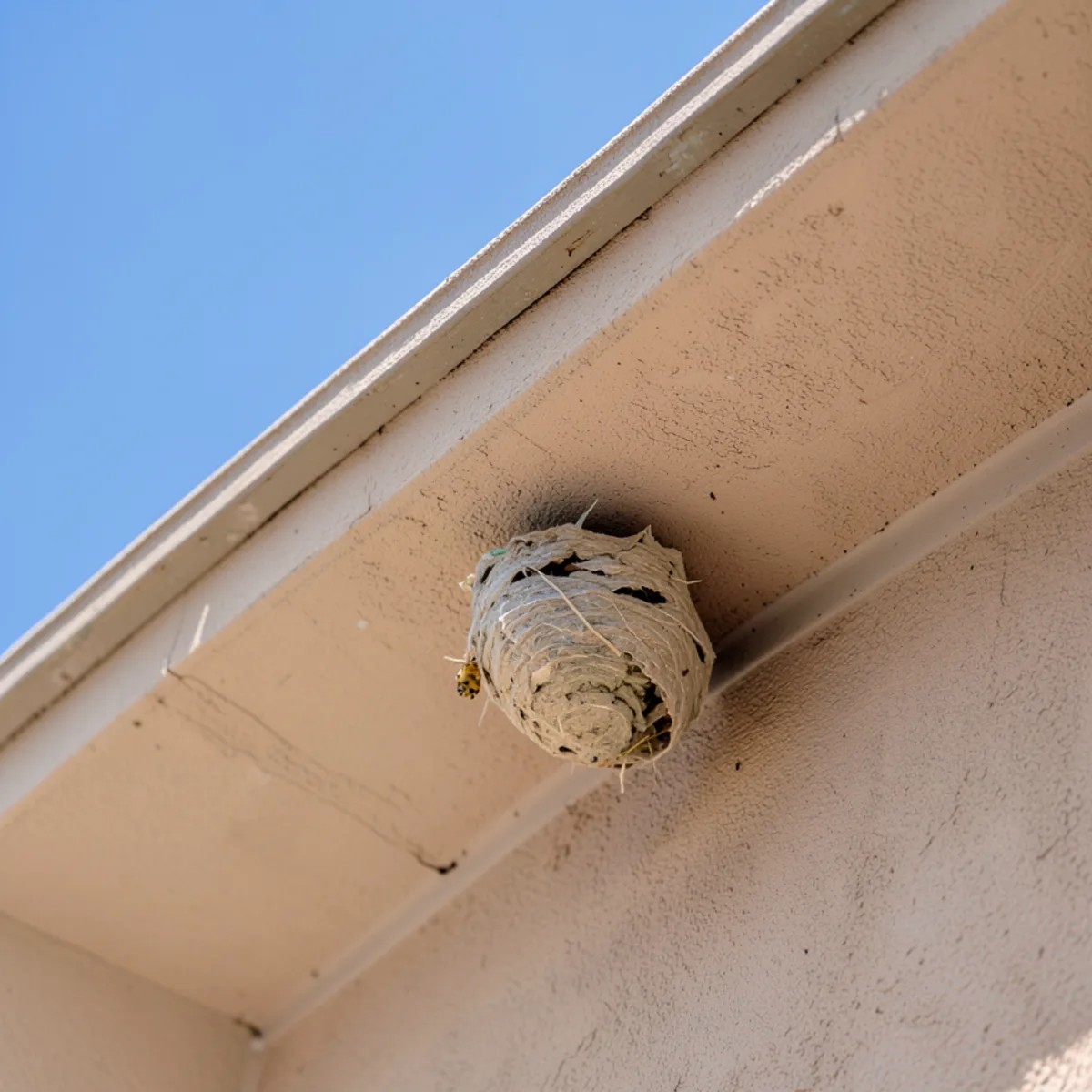
University of Arizona Extension is fair to these insects. Paper wasps feed on caterpillars and other pests, along with fly larvae, and Extension says they should be tolerated where they pose no immediate threat. It also says the benefits usually outweigh the harm unless the nest is in a high-traffic spot such as a doorway or outdoor living area.
So a nest on the far side of a shed may be a live-and-let-live decision, and that is a fair answer to get on the phone. A nest on your front door frame is another matter, because Extension says paper wasps will leave the nest and dive-bomb anyone approaching.
Part of what you may be seeing is the European paper wasp. Extension says it is usually more aggressive than native paper wasps and can be spotted by its yellow-orange antennae, although that is a detail for binoculars, not a closer look.
Hornets, Yellowjackets and Mud Daubers: What Each One Takes
Hornet extermination is what many people ask for, but the word covers a lot. The insect and the nest decide the method.
| Insect | Usual nest site | How the job differs |
|---|---|---|
| Paper wasp | Open comb under eaves and covers | Reachable, and often the simplest job |
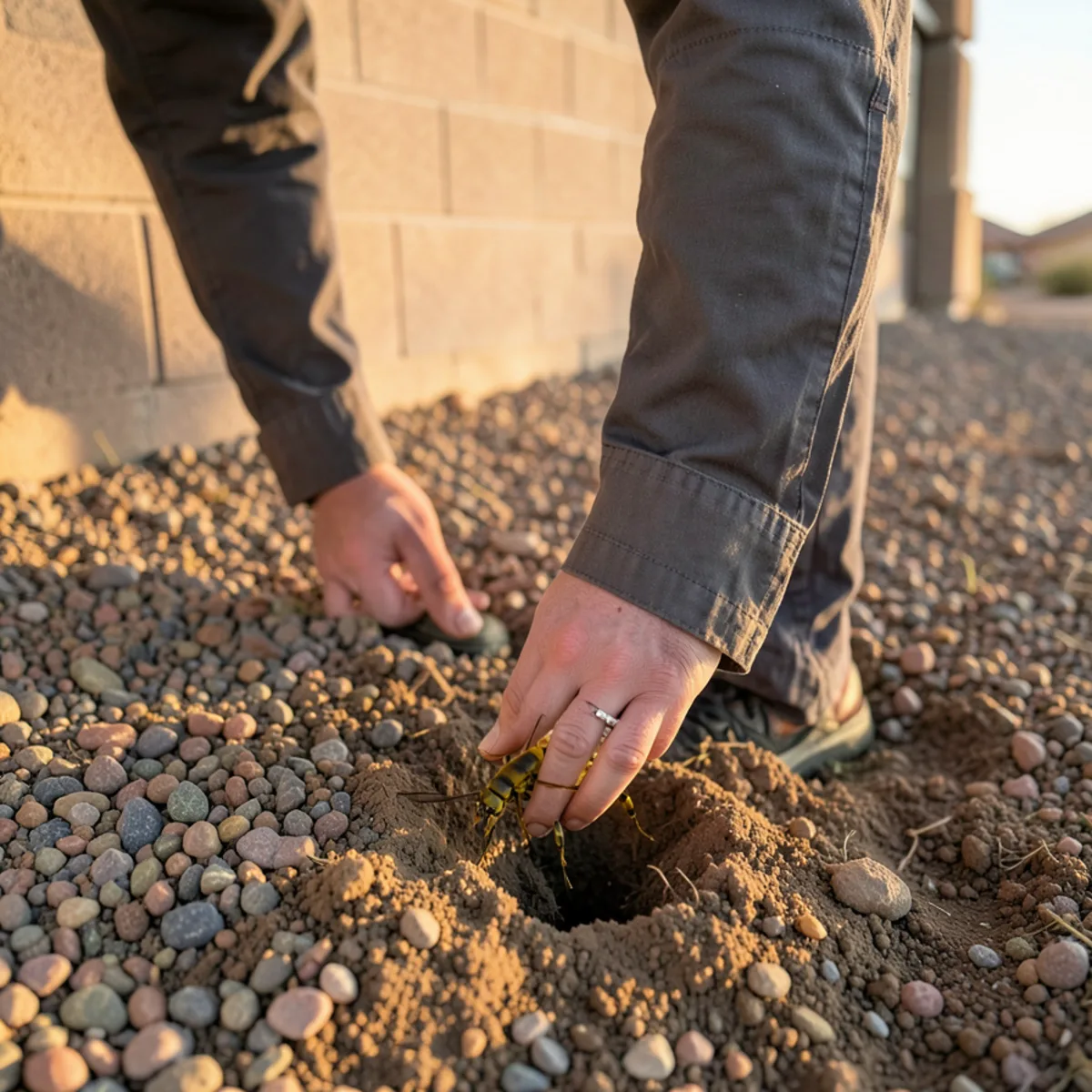
| Yellowjacket | Soil burrow, sometimes a wall void | Entrance has to be found first; can be hidden |
| Large wasps called hornets | Varies by insect | Identify before deciding anything |
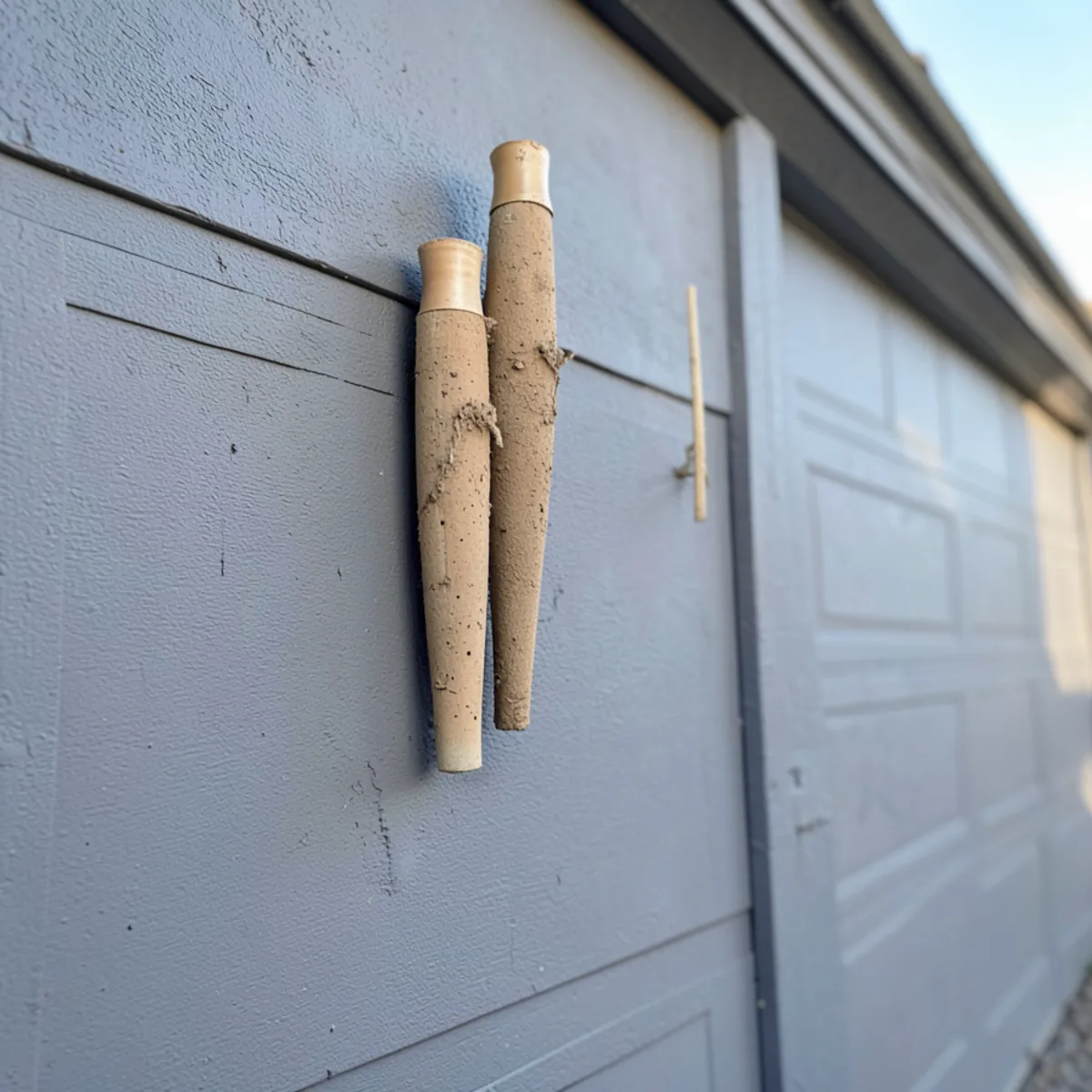
| Mud dauber | Mud tubes on sheltered walls | Solitary and rarely defensive, so mostly a clean-up |
Yellowjacket control takes the most care, because the nest is out of sight. Extension says underground nests can be disturbed unknowingly, and yellowjackets then come out and attack. They are also the wasps most drawn to meat, soda, juice and open trash cans, which is why they end up at the barbecue. If the entrance is in a wall, tell Kai before anyone blocks it. A blocked hole can send them looking for another way, including indoors.
Prefer to write? Request a quote
Calling is fastest. If you are on a job or at work, leave your details and Kai will get back to you.
How Kai Deals With an Active Nest
The treatment is a small part of the job. Timing and reading the location matter more.
- Find the nest. Kai traces where the wasps are coming and going and checks for a second nest nearby.
- Identify the insect, because paper wasps and yellowjackets call for different approaches.
- Choose the timing. Extension's guidance is to treat when wasps are home from foraging, at night for exposed nests and early morning or evening for ground nests. Kekoa's day starts at 6 a.m. on weekdays, and cool hours are the useful ones.
- Treat following the label, with placement kept away from where pets and kids reach.
- Remove the nest once adults are dead, so it is gone and not just empty.
- Wash the spot so colony odor does not bring survivors back.
You then get a plain account of what was used and where, and advice for the rest of the season.
How Soon Does Wasp Activity Stop?
A treated nest usually quiets down quickly, since Extension describes the products used on exposed nests as quick knockdown. Stragglers can return for a day or so after a nest is gone, because foragers were out when the work happened. They should fade out. Keep clear of the spot until then, and call back if you see steady traffic in one place, as that usually means a second nest.
Wasps are seasonal, and new nests start each year, so one clean-out does not close the subject. One Google reviewer on monthly service describes hornet abatement on a few occasions as part of it.
What Does Wasp Nest Removal Cost Depend On?
Kekoa has no published price for wasp work. A short phone description will usually narrow it down. What moves the cost:
- How many nests, and how spread out they are.
- Height and ladder access, especially on two-story homes and tile roofs.
- Yellowjackets in a wall or the ground compared with an open nest.
- Whether it is a one-off visit or part of existing service.
In Tempe, the difference usually comes down to reach and hiding places. A palm-sized nest on a single-story eave is quick. A yellowjacket nest in a wall void needs tracing before anything is applied, and early morning or evening timing can move the visit.
Not sure it is a wasp at all? Bees are a different job, and bee removal explains what changes. Bees and wasps also both use underground boxes, and that has its own page on bees in meter and irrigation boxes.
Label Rules and Service Records for Wasp Work
A can of wasp spray is a pesticide, and the label controls how it is used. EPA says using one in a way that conflicts with those directions violates federal law, which covers the homeowner on a step stool as much as a company. Paid work adds paperwork in Arizona. A.A.C. R3-8-501 has applicators record each service, including site, date and time, target pest, product trade name and amount, and R3-8-503 has the business keep those records for three years. Want to know what went on your eave? Ask.
Why Kekoa, and Where Kai Works
- A Google reviewer on monthly service names hornet abatement along with scorpions and mice.
- Customers describe a one-person business, so the same person handles the job and answers for it.
- Prevention advice comes up in reviews, and that is half of keeping wasps off a house.
- One monthly customer says he leaves a list of all chemicals used at each visit.
- Customers report a reminder the day before and on-time arrival, which helps when a nest sits by the door you use.
- Google rating of 5.0 from 54 reviews on the November 2, 2026 check.
To keep wasps from settling, keep trash lidded, cover food outside, fix drips, and mention any starter nest early. For anything active, stay clear.
Businesses doing this work need an Arizona pest management license under A.A.C. R3-8-201. Check one before you book at opm.azda.gov/PCBusSearch.php.
Kai's wasp work runs across Tempe and neighboring cities such as Gilbert, Chandler and Phoenix.
5.0★ from 54 Google reviews
What customers say about wasp & hornet control with Kai
“He leaves a list of all chemicals he has used during his monthly visits. I have used big companies in the past and had to deal with no shows, turnover, price increases, etc. With Kai, you get Kai as he is a one man show.”
“With Kekoa you will get a great company who cares about their clients, does a fantastic job time and time again and won’t jack up the rates once they have you as a client.”
“We have had monthly pest control services which have kept the scorpions and other bugs away, as well as mice and hornet abatement on a few occasions.”
Wasp & Hornet Control: common questions
When are wasps most active in Tempe?
The warmer months are when wasps cause the most trouble here. Nests grow through the season, so a colony that was a few cells in spring can be a real problem by summer. University of Arizona Extension notes yellowjackets pester outdoor diners in warm weather too. Winter is the quiet time, and Extension says a low-risk nest can be taken down then.
Where do paper wasps build nests around a home?
They choose protected places. Under eaves is the classic, and University of Arizona Extension names it specifically, but around a Tempe house also check patio covers, light fixtures, gate tops, door frames, shade structures, block wall caps and the inside of unused grills. Look from well back, with binoculars if you own a pair, and do not reach into anything.
Will a nest come back in the same spot?
Old nests are not reused, but the same spot can still get a new one. Extension says paper wasps and yellowjackets use a nest for one year, and paper wasps may build beside an old nest. That is why Extension recommends removing the nest and washing the area with a jet of water to clear colony odors.
Are hornets in Tempe different from wasps?
Hornet is a loose word around here, used for almost any large wasp. A hornet is a wasp in any case, and the job depends on the nest more than the name: where it is, how big it is and who walks past it. One Google reviewer on monthly service mentions hornet abatement a few times. Describe yours and Kai will identify it.
Can I just hose a wasp nest off the eave?
Do not try it on an active nest. Extension says paper wasps leave the nest and dive-bomb anyone who approaches, and both paper wasps and yellowjackets can sting more than once. Water alone leaves the wasps alive and upset. The water jet Extension mentions comes last, after the adults are dead, to clear the scent.
Should a nest be dealt with if nobody is allergic?
Only if it sits in a high-traffic place. Extension says the benefits of wasps usually outweigh the harm unless a nest is near a doorway or outdoor living area, and they eat caterpillars and fly larvae. Allergies raise the stakes but are not the only reason. A nest at a child's height by a gate is a good reason on its own.
Where we offer this
- Yavapai CountyEaves, sheds and outbuildings on larger Black Canyon City lots collect paper wasp nests, and water along the Agua Fria gives the colonies a steady supply close to the house.
- TempePatio covers, pool gates and stucco eaves put paper wasp nests right at everyday doors.
- GilbertDamp beds on canal-side lots give wasps water all summer and yellowjackets softer ground to nest in.
- ChandlerIrrigated old farm soil stays workable at wall footings, which suits ground-nesting yellowjackets.
- PhoenixFlood-irrigated lots hold standing water behind berms, an easy drink for wasps nesting under nearby eaves.
- Fountain HillsCovered patios on hillside homes can put paper wasp nests high on the eave, where a ladder matters.
- Sun LakesInsects gather along watered fairways, and rear patios facing them are where wasps tend to hunt and settle.
- ScottsdalePatio dining near Greenbelt lakes and paths draws yellowjackets, which go for meat, soda and open bins.
- Paradise ValleyOne-acre lots mean long eave lines and outbuildings, so there are more corners to check for a second nest.
Talk to Kai about wasp & hornet control
Call first. You will reach the owner, not a call center.
Kekoa Pest Control, 2407 E Wesleyan Dr, Tempe, AZ 85282, (209) 563-1650
- 5.0★ on Google (54 reviews)
- Family owned, owner operated
- Serving since 2022