
Emergency Pest Control · By Kai Horner, owner of Kekoa Pest Control · Published · Updated
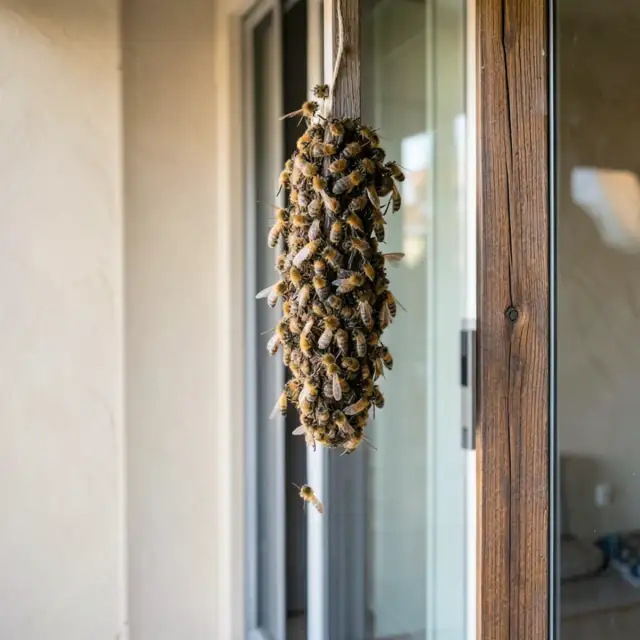
A cloud of bees pouring onto the porch looks like an attack, and usually it is not. This guide helps you keep your household out of the way, work out which kind of bee problem you have, and decide if emergency pest control is needed at your home in Tempe or Mesa.
Bee swarm: what to do in Arizona right now
The first ten minutes decide most of what follows. Do these before you search for anyone to call.
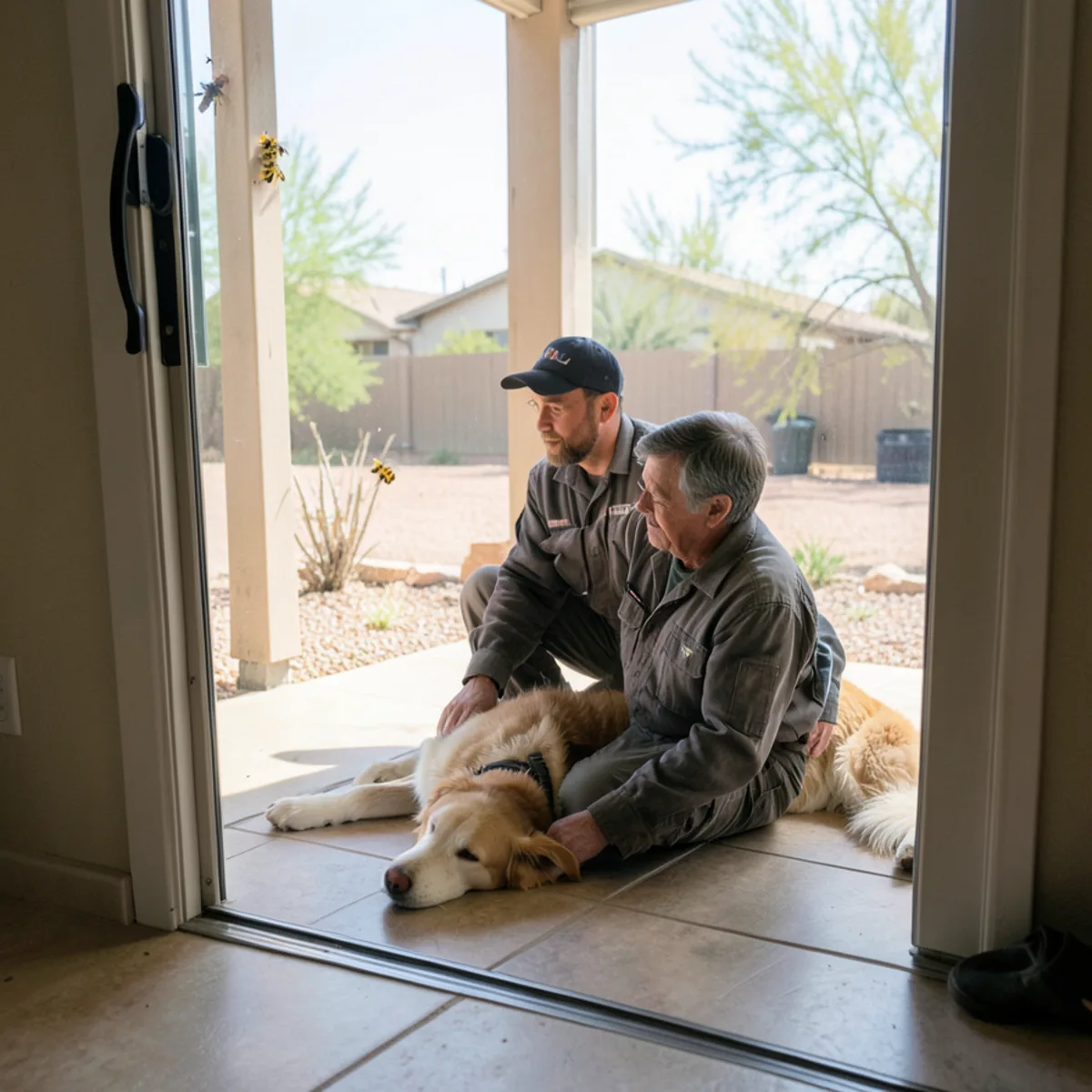
- Get inside. The City of Mesa's advice is to stay indoors and close all windows and doors.
- Bring kids and pets in. Then warn neighbors who share the path or the wall.
- Stop the noise. Turn off mowers, blowers and pool equipment you can reach without passing the bees. Vibration and loud engines are known triggers.
- Leave it alone. No hose, no spray can, no broom, no smoke.
- Mark the area. University of Arizona Extension suggests cordoning off a swarm with caution tape if it sits near foot traffic.
- Take a photo from indoors. Note the time it arrived.
If the bees are stinging, move now
An attack is different from a swarm. Call 911 if someone is in danger. University of Arizona Extension's advice for a person under attack is to cover the face and head, run to the nearest building or car, go inside and shut the doors. With no shelter close by, keep going for at least 240 yards or until the bees give up.
- Do not swat. Flapping is the worst response, according to the university.
- Do not jump in a pool. The bees wait longer than you can hold your breath.
- Do not stop to collect belongings.
- If someone cannot move, cover their face and get help.
For anyone stung, the City of Chandler says to call poison control to decide whether home care is enough. Poison Help is 1-800-222-1222. Chandler's page says to seek medical care right away after more than 15 stings, if you feel ill or if you suspect an allergy, and 911 is for anything life threatening.
The university adds that a stinger keeps releasing venom for several minutes once it is in the skin, so it says to scrape it away quickly and not to pinch it with your fingers. It also says people with severe sensitivities should always carry their emergency treatment and tell those around them.
Swarm or hive? How to tell from a distance
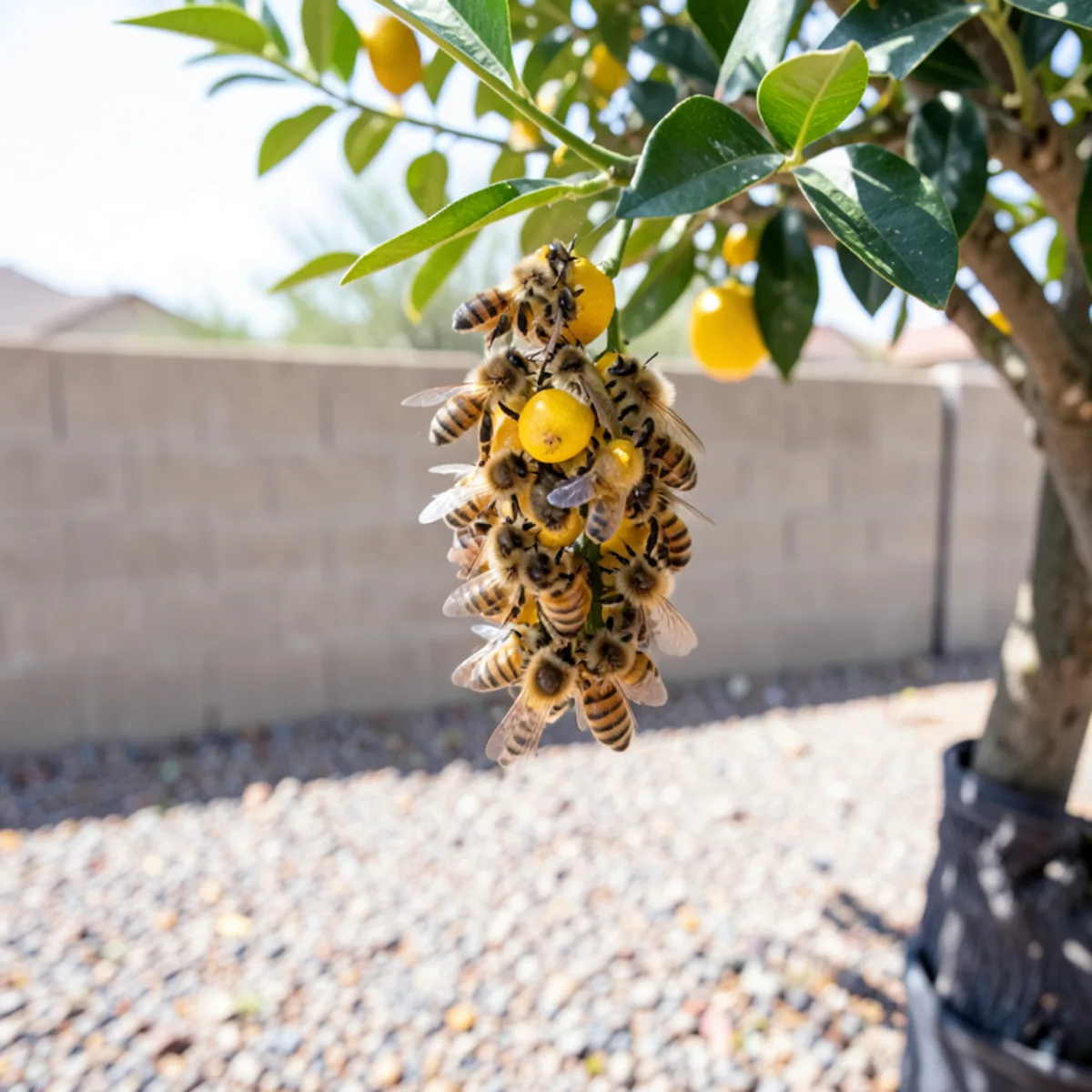
This one question changes the risk and the job. A swarm is a traveling group with a queen and no home. A colony has comb, brood and guards, and the same university publication says the chance of stings rises sharply once brood are being reared.
| What you see | Resting swarm | Established colony |
|---|---|---|
| How it appeared | Suddenly, on a branch, wall or post | Built up over days or weeks |
| Bee traffic | No steady stream in and out of a gap | Many bees flying in and out of one opening |
| Pollen on hind legs | None showing | Foragers carrying yellow or orange pollen |
| Temper | Generally docile unless disturbed | Defends the nest, may chase |
| Usual outcome | Moves on within 24 to 72 hours | Stays until removed |
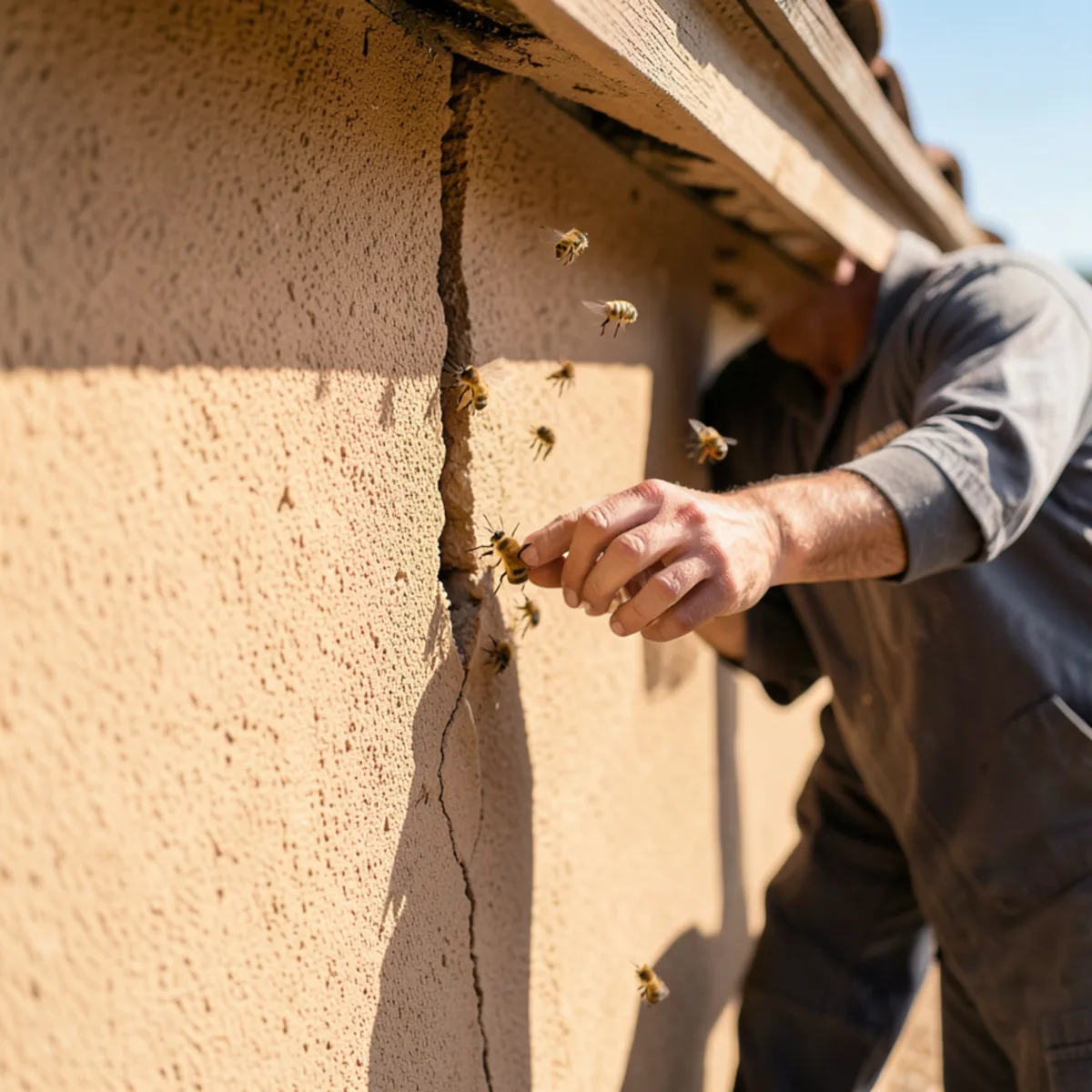
Binoculars help here, and you can use them from behind glass. Look at the cluster's edges. If bees are disappearing into a soffit, a vent or a crack in the stucco, read that as a colony even if the cluster looks new.
A few bees on the pool step or the bird bath are neither. The university says most bees seen in a landscape are foragers from an established colony looking for water, nectar or pollen, and that single bees are generally no cause for concern unless someone has an allergy.
What is happening inside that cluster
Swarms form when a colony gets crowded. The old queen leaves with most of the workers, and because she is a weak flyer she often lands soon after takeoff. Workers fill their stomachs with honey before leaving, and that is all the food the group has. Several hundred scouts fly out to inspect holes, voids and boxes, then lead the rest to the chosen spot, which can be miles away.
Chandler's bee page puts swarming mostly from February through May and again in October, though the university notes it can continue through the year while pollen and nectar last. Scouts on your eaves are worth noting. They may be looking at your house as the new home, and any gap of 1/8 inch or more is worth sealing once the bees have gone.
What can turn a calm swarm defensive
The university's list of irritants goes further than most people expect, so hold off on these while the bees are parked nearby:
- Landscaping equipment, for its sound and vibration
- Water, stones or anything else that hits the cluster
- Strong smells, including petrol, kerosene, paint thinner, some pesticides and even some hair spray
- Work close to them on cloudy days or cool mornings, when honey bees are more irritable
The university is also plain that it does not recommend pesticide sprays on swarms or colonies. The can of wasp spray under the sink stays there.
When a swarm has to be moved
Leaving it alone works when it sits away from people. It stops working in a few situations. These are the cases that justify a call:
- The cluster blocks a front door, gate or side path you must use.
- Someone in the home has a bee allergy.
- It sits near a school, daycare or dense housing, which Mesa singles out.
- It has stayed past about three days.
- Bees have started entering the structure.
Removal options include a local beekeeper or a pest professional, and the university lists both. On private property, Mesa says the owner or occupant pays for that service. If bees are a public safety hazard, the city page also points residents to Maricopa County. Do not try it yourself, and read our page on bee and wasp removal for how the work is scoped.
Who to call depends on where it landed
The spot decides the phone call, and in some cases the bill. The cities below publish their own rules, so check yours if you live elsewhere in the Valley.
| Where the bees are | Who it usually falls to |
|---|---|
| Your house, yard or business | You, through a beekeeper or pest professional |
| A city-owned meter or valve box in Chandler | The city, for non-threatening bees |
| A water meter in Mesa | The city lists a separate number for this |
| A city park | The city's parks staff in Mesa or Chandler |
| A public safety hazard in Mesa | Maricopa County Vector Control, which Mesa says can destroy a hazardous wild hive or swarm under A.R.S. 36-601 |
| Bees attacking people | 911 |
Tempe homeowners should treat a swarm on private property as their own to deal with, and ask the water department before paying for anything in a meter box. Renters should tell the landlord the same day.
After it leaves: a one-hour walkaround
A swarm that rested here may have had scouts checking your eaves and vents. Wait until there are no bees moving at any opening, then walk the house. The university is firm that you should not seal or fill a hole while bees are moving in and out of it.
- Fill holes of 1/8 inch or larger in walls and rooflines with a good sealant.
- Fit mesh over rainspouts, chimneys and water meter boxes.
- Check irrigation box lids, since a hole in the lid is how bees get in.
- Turn over or remove old clay pots and other hollow yard items.
- Repair dripping taps and irrigation leaks.
- Make sure shed and outbuilding doors close tightly.
How Kai looks at a swarm call
Kai's starting point is that many swarms need patience more than anything else, and saying so is part of fair service. The questions worth asking are where the bees are, how long they have been there, and whether they are going into anything. A photo answers most of that.
If a swarm is blocking your door or bees have moved into a wall, ask about emergency bee removal. Kekoa is one owner, working Monday to Friday 6 to 5 and Saturday 8 to 12, so ask how soon he could reach you and expect a straight answer. A Sun Lakes customer has written about a quick response in an emergency, but timing always depends on the day.
Bees still parked by the door after you have read this? Stay inside and call (209) 563-1650.
Sources
About the author
Kai Horner owns and runs Kekoa Pest Control, a family-owned pest and weed control business based in Tempe, AZ, serving the East Valley since 2022. More about Kai