
Post-Emergent Weed Control in Tempe, AZ
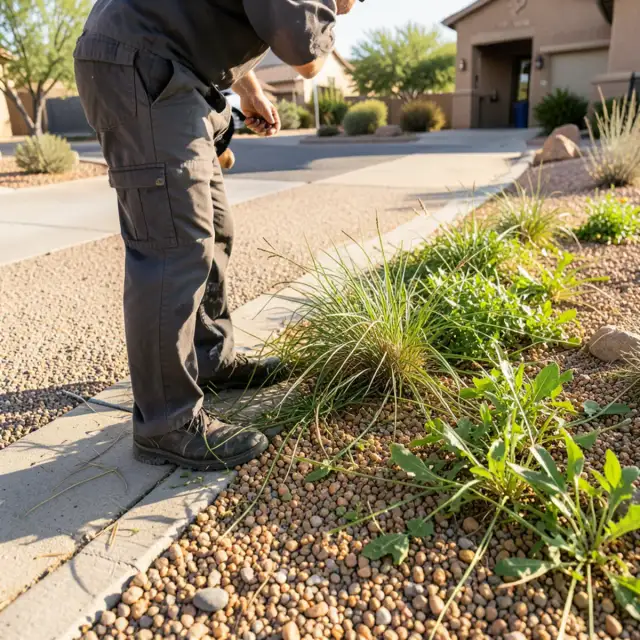
Post-emergent weed control in Tempe, AZ kills weeds that are already up, in gravel, beds, driveways and along walls. It works through the leaves, so it needs green, actively growing plants and a few dry hours. Call (209) 563-1650 and tell Kai what has taken over.
- 5.0★ on Google (54 reviews)
- Family owned, owner operated
- Serving since 2022
Once weeds are up, prevention is off the table for that flush. Post-emergent treatment is the part of Tempe weed control that deals with what you can see today: spurge mats, London rocket along the wall, bermuda in the rock, and whatever has cracked through the driveway.
Post-Emergent Weed Control in Tempe, AZ: When It Is the Right Call
Choose this when:
- Weeds are visible and growing, whatever the season.
- A yard was skipped for a while and needs a reset.
- Pre-emergent has failed in patches, such as dry strips or disturbed ground.
- Bermuda is creeping from a neighbor's lawn into rock.
- Weeds are coming through hardscape joints and curbs.
This type of spray has no effect on seeds in the soil. University of Arizona Extension says post-emergents have no soil activity and do not stop seedlings, so a sprayed yard will sprout again at the next rain. Pairing with pre-emergent timing is what breaks the cycle.
What a Spray Service Includes
A post-emergent visit covers more than the spraying:
- Naming the leading weeds and how far along they are.
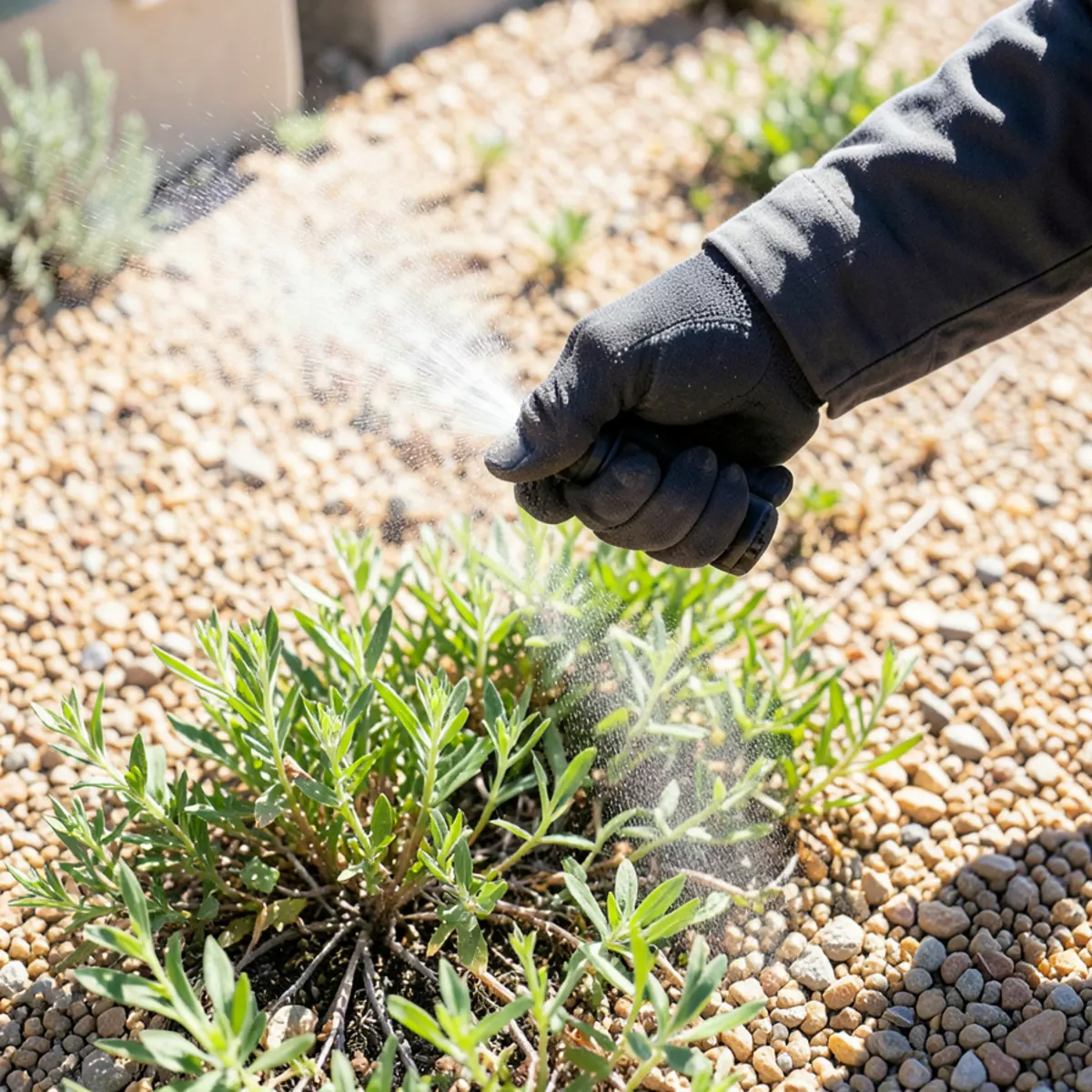
- Spot or wider treatment at label rate, with a coarse, low spray.
- Shields for trees, agaves and beds you want left alone.
- Advice on leaks and wet soil feeding the growth.
- Clear re-entry and sprinkler instructions.
- A straight answer on whether bermuda or perennial spurge needs another round.
Ask on the phone whether clearing dead growth is part of your job, since that depends on the yard. Repairs to irrigation stay with your landscaper.
What Weeds Are Growing in Your Yard?
Identification comes first, because the hard cases need different handling.
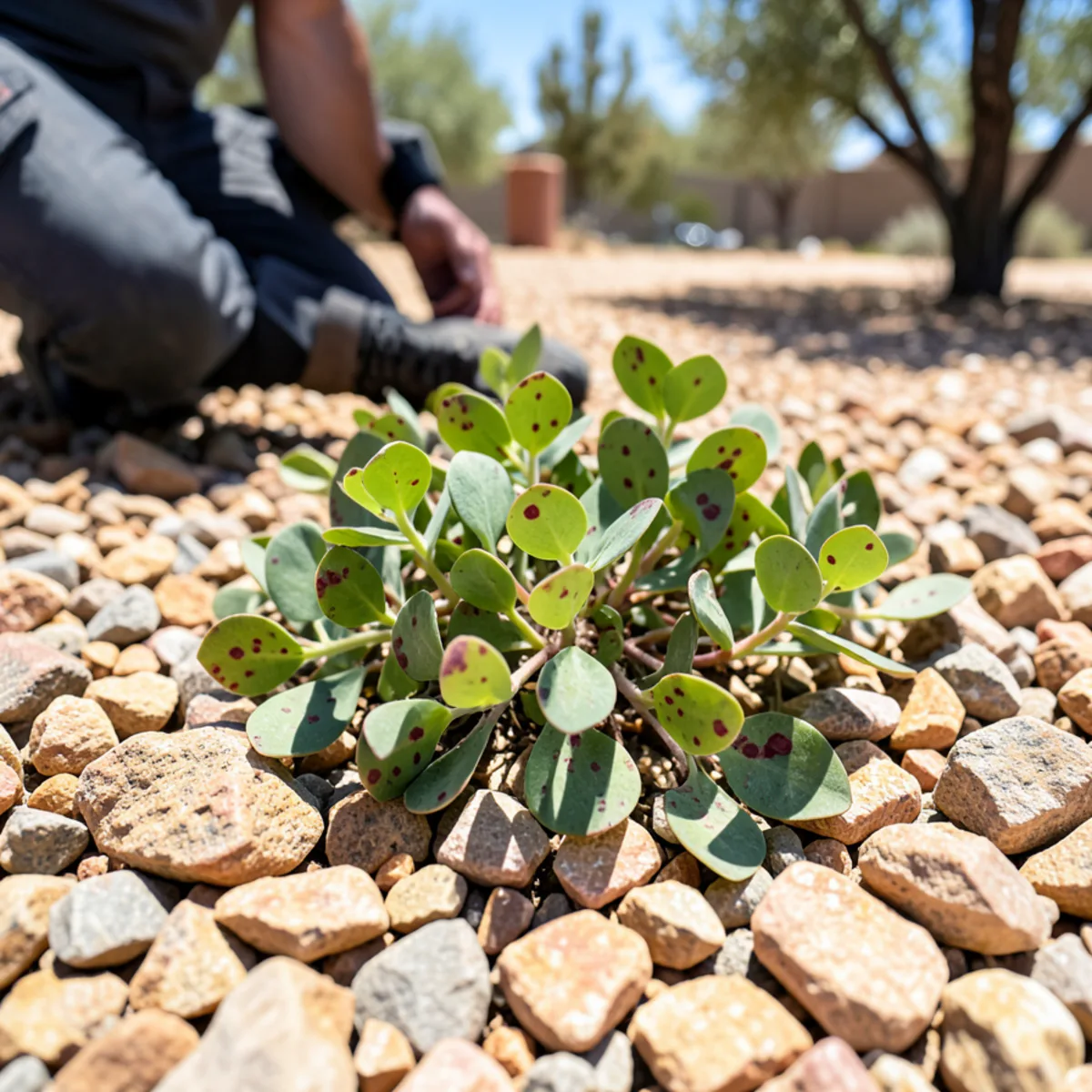
Spurge. Flat green mats that hug gravel and concrete, sometimes with red-spotted leaves. Extension calls them difficult to control. Damp soil and irrigation leaks feed them, and mats often come with stinging ants, so spurge control starts with not walking through it.
London rocket. An upright cool-season weed with small yellow flowers. It moves quickly in late winter: in one University of Arizona trial, plants were 4 inches tall and starting to flower on March 3. Results varied sharply between herbicides, which shows that the product must match the weed.
Bermuda grass in gravel. A perennial with underground rhizomes. Killing the top does little unless the product travels to the roots. It needs green growth and warm days, and Extension gives late spring through fall, with days above 80 degrees, as the time to treat it.
Annual grasses. Southwest cupgrass and similar summer grasses follow monsoon moisture.
How Kai Reads the Yard Before Spraying
Walking the property comes before mixing anything. Things worth checking include which weeds lead, how mature they are, whether seed is on them, and what is growing close by. Leaks get a look too: Extension says fixing irrigation leaks and wet soil is part of managing spurge, and a sprayed weed by a dripping emitter tends to be replaced fast.
Weather decides the rest. Wind means drift, and a building storm means washed-off product. Heat-stressed weeds also take up less, which is why cool morning hours help in summer. Kekoa's weekday start at 6 a.m. fits that.
Spot Spraying, Broad Spraying or Pulling: The Trade-Offs
Each has a place, and a yard may need all three:
| Method | Good for | Trade-off |
|---|---|---|
| Spot spraying | Scattered weeds, beds near plants, hardscape cracks | Takes time on a heavily infested yard |
| Wider spraying | Open gravel fully covered in weeds | Needs calm air and clear margins near plants |
| Hand pulling | A few weeds in a small area; London rocket before seed | Bermuda and taprooted spurge regrow |
| Repeat rounds | Bermuda and perennial spurge | More than one visit |
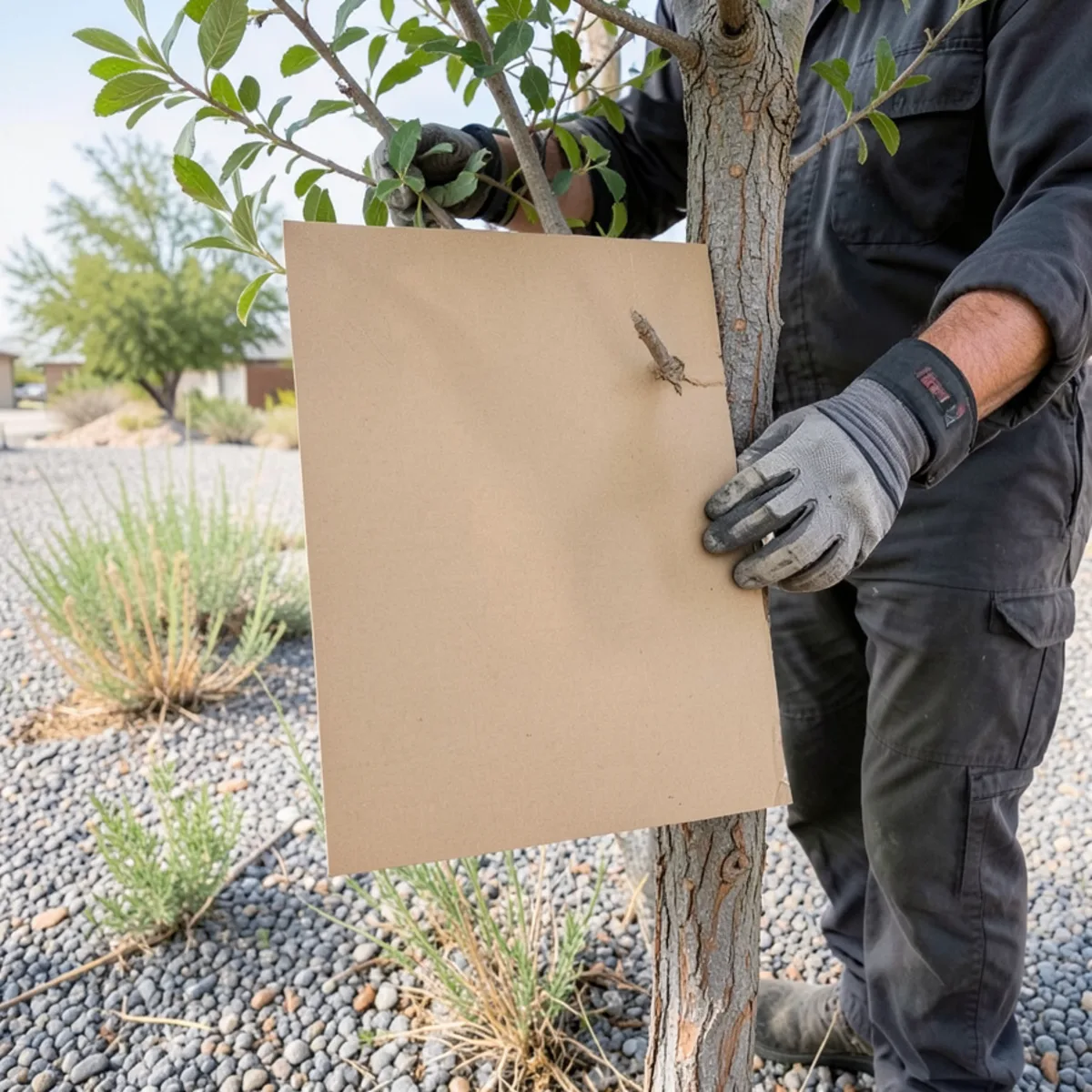
For weed spraying service near desirable plants, shielding helps. Extension suggests plastic sheeting, plywood or cardboard. For killing existing weeds across a big rock yard, see the gravel yard weed control page, and for a retail or HOA site, commercial weed control.
Prefer to write? Request a quote
Calling is fastest. If you are on a job or at work, leave your details and Kai will get back to you.
The Spray Visit, Step by Step
- Walk the yard and name the weeds.
- Check wind, rain forecast and sprinkler timing.
- Mark or shield plants, beds and anything you want left alone.
- Apply at label rate, with a coarse low spray.
- Tell you when the area can be used again, and to leave sprinklers off the treated area for a day if the job calls for it.
- Explain what to expect, including what may need a second round.
After Spraying: What to Expect
Do not judge results in the first few days. Extension says effects typically show in 7 to 14 days, so weeds that still look green on day three are probably not a failure. Leave them in place while the product moves to the roots.
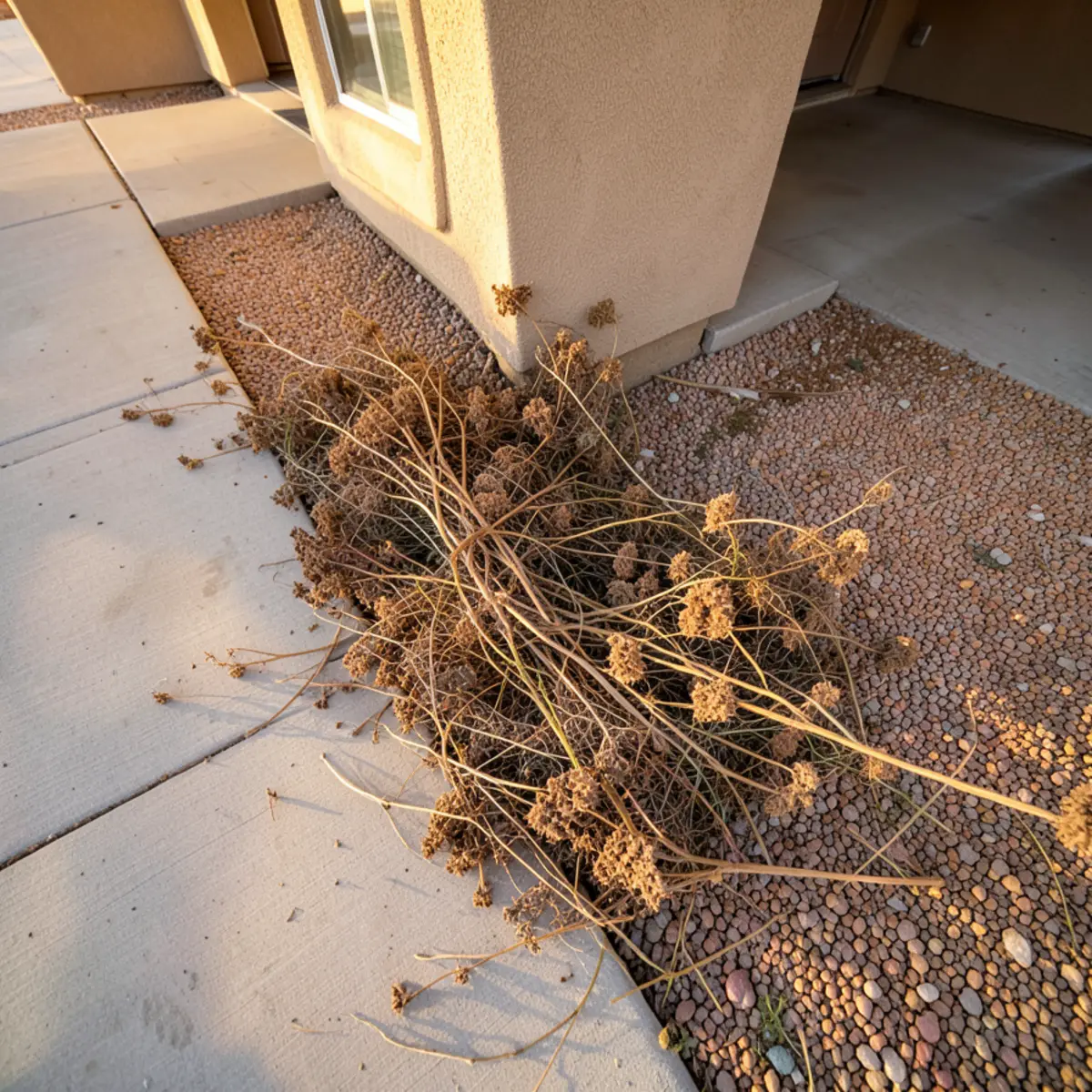
Later, clear away the brown growth, especially spurge that had seed on it, since Extension says herbicides may not kill seed. Some bermuda will return. Extension says it is normal to have to repeat, and Kai will tell you up front if your yard is that kind of job.
What Changes the Cost of Post-Emergent Spraying?
Kekoa publishes no weed spraying rate. Pricing turns on how much ground is covered, how dense and mature the weeds are, how many plants need working around, whether bermuda means return visits, and whether this is a one-time clean-up or part of ongoing service.
Weed age matters more than most people expect. A young flush after a July storm can take one light pass. A yard left until fall needs more product and more time, often with a second trip for regrowth. In Tempe, monsoon timing can shift a visit too, since rain in the forecast means waiting for a clear day. Hardscape joints go faster than a bed full of agaves, and a corner lot adds curb strips to cover. Plants that need shielding and sprinklers that must stay off add time on site as well. Ask whether the job can share a trip with a pest visit.
Drift, Neighbors and What the Label Allows
Spray that leaves your yard can become your neighbor's dead plant, so the label's drift, site and rate directions carry real weight. EPA says use that conflicts with them violates federal pesticide law. Property lines count as well. Bermuda on a shared wall is shared: agree with your neighbor before anything crosses that line. A curb strip or common area in an HOA belongs to the association, so ask before treating it. City rules may still apply to overgrown strips, and Mesa's 9-inch standard is one example.
Why Kekoa for Existing Weeds
- A Google reviewer says Kai deals with their pest issues and weeds as well.
- Customers mention clear explanations, which matter when results take two weeks.
- As a one-person business, Kekoa puts the owner in your yard, not a stranger.
- A monthly customer says Kai leaves a list of chemicals used, which is worth asking for after any spray.
- Kekoa holds 5.0 ratings on Google from 54 reviews and on Yelp from 8, as of November 2, 2026.
To prevent the next round, fix leaks, keep bare soil to a minimum, and follow up with pre-emergent before the next rains.
One thing to check with any applicator: Arizona licenses pest management businesses through its Department of Agriculture, and weed control is its own license category. Confirm the category with them and at opm.azda.gov/PCBusSearch.php.
Kai sprays in Tempe and in cities close by, including Chandler, Gilbert and Phoenix.
5.0★ from 54 Google reviews
What customers say about post-emergent weed control with Kai
“He leaves a list of all chemicals he has used during his monthly visits. I have used big companies in the past and had to deal with no shows, turnover, price increases, etc. With Kai, you get Kai as he is a one man show.”
“With Kekoa you will get a great company who cares about their clients, does a fantastic job time and time again and won’t jack up the rates once they have you as a client.”
“Kai listens and never fails to address our pest issues and weeds as well.”
Post-Emergent Weed Control: common questions
How long until sprayed weeds die?
Expect days to a couple of weeks, not hours. University of Arizona Extension says effects of glyphosate typically show in 7 to 14 days, and a bermuda lawn takes about two weeks to brown. Tempe heat can make stressed weeds slower, because the product needs a plant that is actively growing to carry it to the roots. Hold off on pulling them until then.
Will post-emergent spray harm nearby plants?
It can if it lands on them. Extension says to take particular care around desirable plants, to use a coarse spray that reduces drift, and to shield plants with sheeting, plywood or cardboard. That is why the work is low and targeted, not broadcast. Tell Kai about young trees, agaves and anything newly planted so he can work around them.
Which Valley weeds are hardest to kill?
Bermuda and spurge top the list. Bermuda survives on underground rhizomes and often comes back after one round. Extension calls spurge difficult to control because it grows fast and spreads easily, and the perennial white margin spurge has a taproot that complicates removal. Older weeds of any kind are harder than young ones, so early treatment counts.
Can it rain after spraying?
Not for several hours. Arizona Extension says not to apply glyphosate if rain is expected within 4 hours, since rain washes it off the leaves and greatly reduces how well it works. In monsoon season that often pushes spraying to the morning. If a storm builds, the job waits for a clear day. Sprinklers on the treated area need to stay off too.
Should I pull weeds after they turn brown?
Yes, particularly spurge and anything that had seed on it. Extension says herbicides may not kill seed, so dead spurge should be disposed of. Do not rake mature plants across the ground, because that spreads seed. Wear gloves and eye protection around spurge sap, and clean tools afterward, so a tidy-up does not plant next year's crop.
Where we offer this
- Sun City WestFor weeds already up when a Sun City West notice arrives.
- TempeHardscape joints and rock yards by driveways are the usual spots for a quick spot spray.
- ChandlerSpurge mats follow drip lines and leaks on former farm soil, so fixing water comes with spraying.
- GilbertBermuda from neighboring turf creeps into rock along shared walls and needs warm-season rounds.
- PhoenixOlder irrigated lots in Arcadia can hold bermuda that only warm-weather rounds will reduce.
- MesaWeeds past 9 inches can draw a code complaint, so overgrown lots often need a quick reset.
- ScottsdaleSpraying near agaves, cactus and preserve-edge plantings calls for low, shielded work.
- Apache JunctionNative cactus is part of the yard here, so spraying stays low and well away from it.
- GuadalupeSmall lots and close neighbors make drift control matter more than coverage.
Talk to Kai about post-emergent weed control
Call first. You will reach the owner, not a call center.
Kekoa Pest Control, 2407 E Wesleyan Dr, Tempe, AZ 85282, (209) 563-1650
- 5.0★ on Google (54 reviews)
- Family owned, owner operated
- Serving since 2022