
Weed Control · By Kai Horner, owner of Kekoa Pest Control · Published · Updated
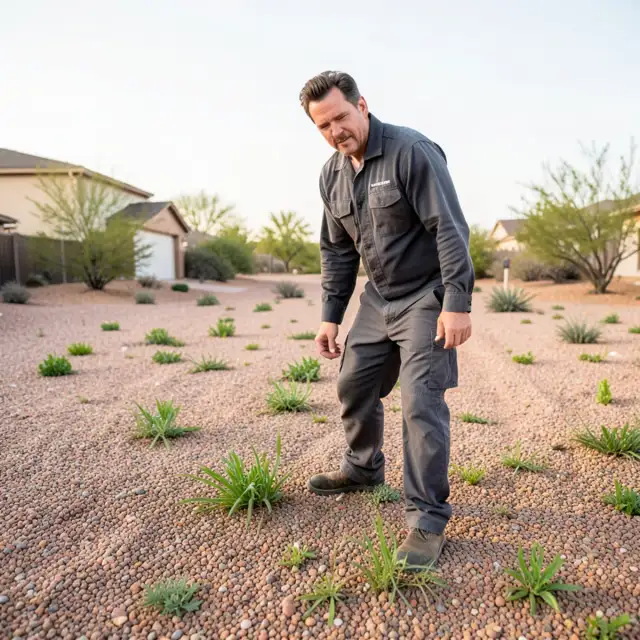
Rock yards are sold as low maintenance, and then the first good rain turns yours green. Pulling helps for a week. Spraying helps for a month. The reason it keeps happening is simple, and it can be fixed with a plan that fits weed control for yards in Tempe and Chandler.
Why weeds growing through gravel in Arizona never quit
Gravel is a mulch and not a wall. It shades soil and slows some seeds, but it gives others a cool, moist pocket to start in. University of Arizona turf guidance splits annual weeds into two groups, summer annuals and winter annuals, so a Valley yard can have a fresh crop each season. Spurges and grasses take the warm months.
Here is what keeps feeding them:
- Windblown seed. Dust storms and neighbors' yards deliver seed and fine soil onto the rock.
- Dust build-up. Over the years, soil fills the gaps between stones, and that is what roots grow in.
- Water. Monsoon rain, drip lines and sprinkler overspray do the rest.
- Seed in the ground. Old seed waits under the rock for moisture.
- Parents left alone. One weed left to flower can drop seed for the following season.
Landscape fabric, thin rock and other usual suspects
Most repeat problems trace back to how the yard was built or how it has aged. In general trade judgment, these cause the most trouble:
| Cause | What you will see | Fix |
|---|---|---|
| Thin rock | Soil or fabric showing through | Top up the depth, keep it even |
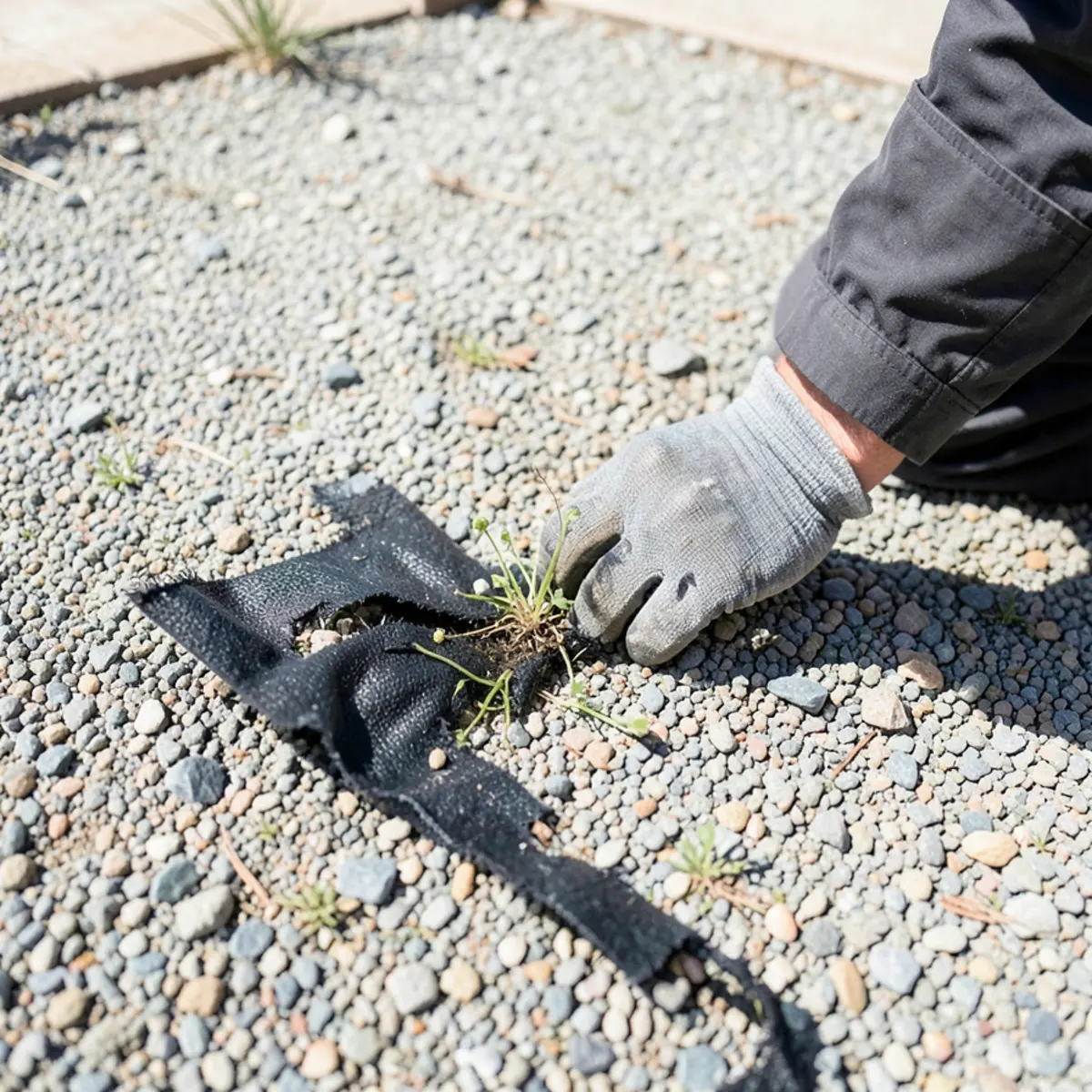
| Torn or lifted fabric | Weeds in a line along a seam | Trim, cover, or replace the section |
| Old dusty gravel | Weeds spread evenly | Rake clean, top up, plan for pre-emergent |
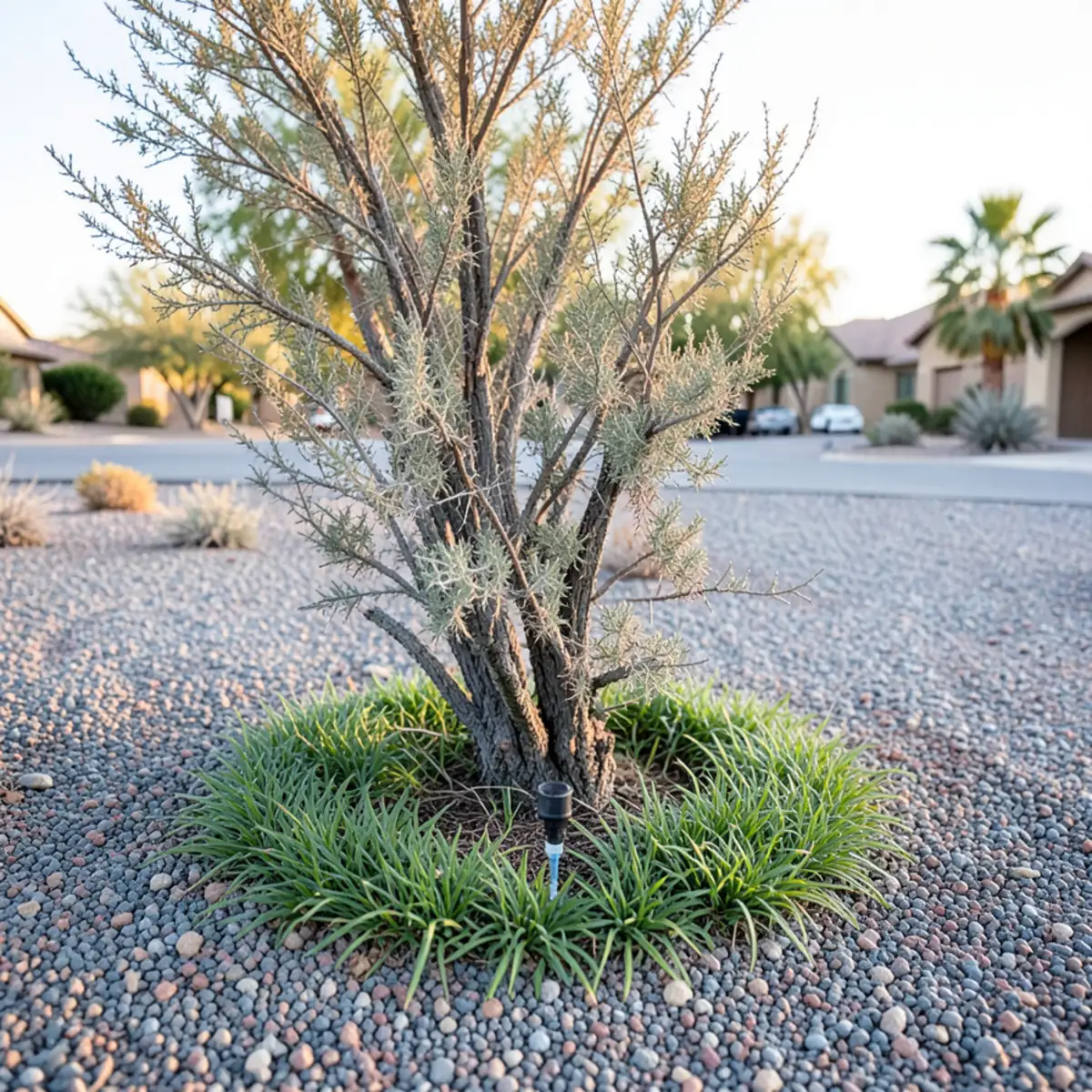
| Leaking drip emitter | A tight ring of weeds | Repair the leak first |
| Sprinkler overspray | A strip along the lawn edge | Adjust heads away from rock |
| Low spots | Patches where water sits | Regrade or add rock |
Depth has a number behind it. University of Arizona Extension says a mulch layer of three inches, with gravel and rock counted as mulch, can prevent annual weeds, but it will not prevent perennial ones.
A quick note on fabric. It can slow weeds rising from the soil below, but it does little for seeds that land on top, and roots from the top can grip into it. So an old fabric yard with dust on top can look worse than clean rock over bare soil. Do not rush to rip it out, though. Tearing it up can bring buried seed to the surface.
Annual or perennial? Name the weed before you treat it
Extension's first step in any weed plan is to identify the plant, because the life cycle shows where it is weak. Gravel yards mostly grow three groups.
| Group | Common examples | How it comes back | What works |
|---|---|---|---|
| Summer annuals | Spurge, puncture vine, pigweed, Russian thistle | Seed each warm season | Pre-emergent ahead of the flush, pull before seed |
| Winter annuals | Filaree, mustards, foxtail, brome grasses | Seed from late summer through early spring | Fall pre-emergent, pull before seed |
| Perennials | Bermudagrass, nutsedge, field bindweed, johnsongrass | Roots, rhizomes and tubers | Systemic product while actively growing |
Why bermudagrass and nutsedge ignore the plan
These are the ones that make a good program look like a failure. Pre-emergents work on germinating seed, so a plant spreading from underground is not touched. Pulling can make things worse, since Extension warns that root pieces break off and sprout new plants. If you dig, dig when the soil is moist.
Systemic products go down into the roots, but only on a plant that is growing. Extension says not to apply when a weed is under drought stress or semi-dormant, and that it helps to water bermudagrass before treatment. In a dry August rock bed, that timing takes some planning.
How to stop weeds in rock for more than a month
Breaking the cycle means working on two tracks at once: what is growing now, and what is about to grow. Each season has a job. Here is the order that makes sense for most Valley yards.
- Clear the current crop. Pull or treat weeds before they flower.
- Fix the water. Repair leaks and aim sprinklers before anything else.
- Rake and top up. Even out the rock and cover bare spots.
- Apply a pre-emergent on schedule. Time it ahead of germination.
- Water it in as the label requires. Then leave the surface alone.
- Spot-treat what escapes. Catch weeds small, before seed.
- Repeat next season. One application will not carry the whole year.
Why pre-emergent timing matters so much
Pre-emergent products do not touch a growing weed. University of Arizona turf guidance explains they let germination happen, then stop the seedling root, so the shoot never appears. That gives you three rules to work with, even though the guidance was written for lawns:
- Timing. Apply before the flush. The university says by late February or early March in Phoenix and Tucson, when soil is around 50 to 55 degrees.
- Coverage. Products move very little sideways, so gaps turn into weed strips.
- Water. Most products must be irrigated or rained in within the label's window, or sunlight and air take them away.
Disturbing the surface afterward can also break the treated layer, so plan any raking first. For gravel, check that the label covers your site and the plants nearby. Trees and shrubs close to the treated area deserve a careful reading of that label. There is more about this on the pre-emergent weed control page.
What about vinegar, salt and boiling water?
People try these because they are in the kitchen. Boiling water can burn off a small patch, but it leaves roots and seed behind. Salt can linger in soil and harm nearby plants, and it is hard to take back out. Vinegar burns the top of a weed and often leaves the root alive. None of the three does anything about the next round of seeds. If you do use any product on your rock, follow its label directions.
Bare-ground products under rock
Soil sterilants sound like the end of the problem. University of Arizona Extension does not recommend them for home landscapes, because they move down and sideways with water and can injure or kill trees and shrubs whose roots reach the treated soil. In a Valley yard with a mesquite or citrus near the rock, that is a poor trade for a clean look.
How Kai looks at a weedy gravel yard
Customers say Kekoa addresses weeds as well as pests, and pre- and post-emergent weed control is part of the work. Kai's view is that a repeat weed problem is usually a timing and water problem. Ask what grew, when it grew and where the wet spots are. Those three answers often explain the whole yard.
Expect a slow win. Extension says weed seed can stay in the soil a long time, and that managing it may take several years. The first year is usually the messiest, because old seed is still coming up and a wind-driven supply keeps landing on top. Lots on ditch irrigation have one more source, since Extension lists ditch water among the ways seed arrives. Rock that looks clean today can still need attention next season, and that is normal.
The page on gravel yard weed control goes through what a visit looks at. If you hire anyone for this, note that weed control falls under its own license category in Arizona, so confirm the category at the state's license search.
Pulling the same weeds every month? Call (209) 563-1650 and ask how the timing would work.
Sources
About the author
Kai Horner owns and runs Kekoa Pest Control, a family-owned pest and weed control business based in Tempe, AZ, serving the East Valley since 2022. More about Kai