
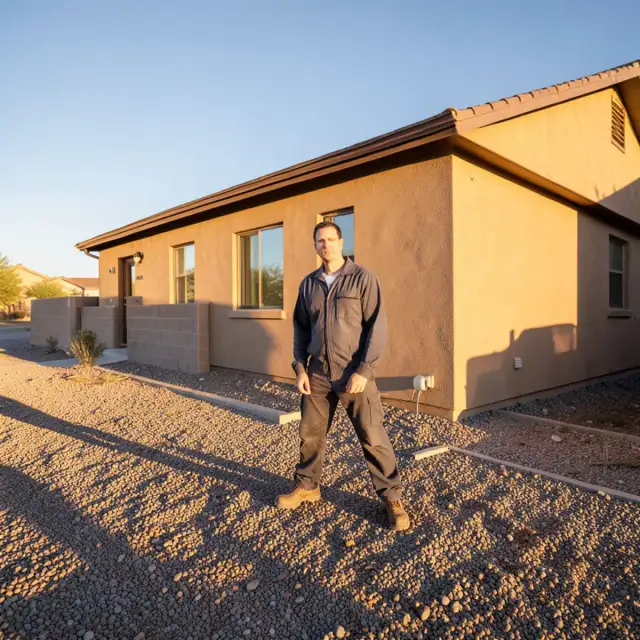
Pest Control Services · By Kai Horner, owner of Kekoa Pest Control · Published · Updated
Most schedule advice is written for places with a real winter. The Valley is different, and that cuts both ways. Pests stay active longer, but plenty of well-sealed homes still see very little. The honest way to choose is to look at what you are finding and where you live. Our monthly pest control page explains what a regular visit covers, and the quarterly pest control page covers the longer interval.
Two facts set the frame. Bark scorpions stay active through much of the low desert year, University of Arizona Extension reports, and they do best on nights above 70 degrees. And the National Pesticide Information Center notes that sunlight can break down pesticide residues, which shortens how long a product lasts. A west-facing wall takes a lot of sun in a Valley June.
Monthly vs quarterly pest control, side by side
| Factor | Monthly | Quarterly |
|---|---|---|
| Visits per year | 12 | 4 |
| Longest gap in the monsoon peak | About four weeks | Up to about 13 weeks |
| Fits best | Scorpions, desert edge, repeat ant or roach trouble | Sealed newer homes, low sightings |
| Inspection chances | More often, so small problems surface sooner | Fewer, so you need to report sightings |
| Annual cost | Higher in total | Lower in total, with more riding on each visit |
| Biggest risk | Paying for visits you may not need | Gaps where a problem grows unseen |
Neither column is the right one for everyone. Think of frequency as a dial you adjust, not a product you buy.
What the Valley calendar does to that dial
Pressure here rises and falls by season, and it does not do so for every pest at once.
| Months | What drives it | What that means for spacing |
|---|---|---|
| November to March | Scorpions less active, but county data has roof rats peaking November to May | Scorpion visits can stretch, rodent watching cannot |
| April and May | Nights warm toward the 70 degrees scorpions favor | Restart shorter gaps before the warmth settles in |
| June to September | Heat, then monsoon flooding of scorpion and cricket shelter | Your shortest gaps of the year |
| October | Nights cool and activity starts to fall | Review your counts and decide on winter spacing |
A year on one flat schedule ignores all of that. Ask whether a plan can move with the season rather than running the same interval in January and August.
What pushes a home toward shorter gaps

Some conditions keep a home under constant pressure, whatever you spray:
- Scorpion sightings indoors. One or two a year is a warning. Regular finds call for a plan.
- Open desert, washes or canals nearby. These hold food and shelter right next to the wall.
- Hollow block walls. They are the shelter bark scorpions pick first in University of Arizona research.
- Citrus trees and thick plantings. Shade and fruit bring insects and rats.
- Heavy irrigation or leaks. Water is what draws most pests through a dry summer.
- Pets fed outside. Bowls draw ants, roaches and rodents.
- Shared walls. A neighbor's unit can supply your roaches.
The monsoon is the stress test. Rain floods scorpions and crickets out of their harborage, and the extension publication lists flooding after irrigation or monsoon rain as a known reason bark scorpions move. If you are going to tighten the schedule at any point, June through September is the time.
How often to spray for bugs when your home is quiet
Quarterly or a longer interval can make good sense. You are a fair candidate if most of these are true:
- You have seen no scorpions indoors in the past year.
- The home is newer or has been sealed, with tight sweeps and weatherstripping.
- There is gravel and a clean foundation band, with no plants touching the wall.
- No leaks, no outdoor pet food, no woodpiles against the house.
- You will call between visits if something changes.
EPA's integrated pest management approach supports this thinking. It starts with monitoring and setting an action threshold, then treats only when pests reach that point. Spraying on a calendar with no signs of pests is not what that method recommends.
Winter is often the natural time to stretch visits, since University of Arizona Extension says scorpions are less active from November to March. Indoor pests are the exception.
Test a schedule for one year before you commit to it
You do not need to guess. A simple log gives you the same kind of evidence an inspection would.
- Keep one note on the fridge or phone. Record the date, pest, room or wall, and count.
- Start on the schedule that matches your worst recent season, not your quietest.
- Review after the first monsoon, when pressure has been at its highest.
- If sightings stayed near zero, try one longer gap and keep logging.
- If indoor scorpions or roach sightings return, go back a step and look for the cause.
Decide your own action level first. Many households treat one scorpion indoors differently from ten ants on a patio, and that is exactly the kind of threshold EPA's method asks you to set.
Why frequency alone will not fix a scorpion home

Here is the point most schedule comparisons skip. University of Arizona Extension is blunt that pesticides alone struggle here, and it ranks pest-proofing well ahead of anything else for reducing scorpion contact. Going from four visits to twelve helps with the crickets and insects scorpions eat, and adds more inspections. It will not close a gap under your back door.
More visits also do not automatically mean more product. University of Arizona Extension's line on pesticides is that the label is the law, and labels limit rates and repeat use. So a good monthly visit may be mostly inspection and spot work. Ask what actually happens on each one before comparing plans.
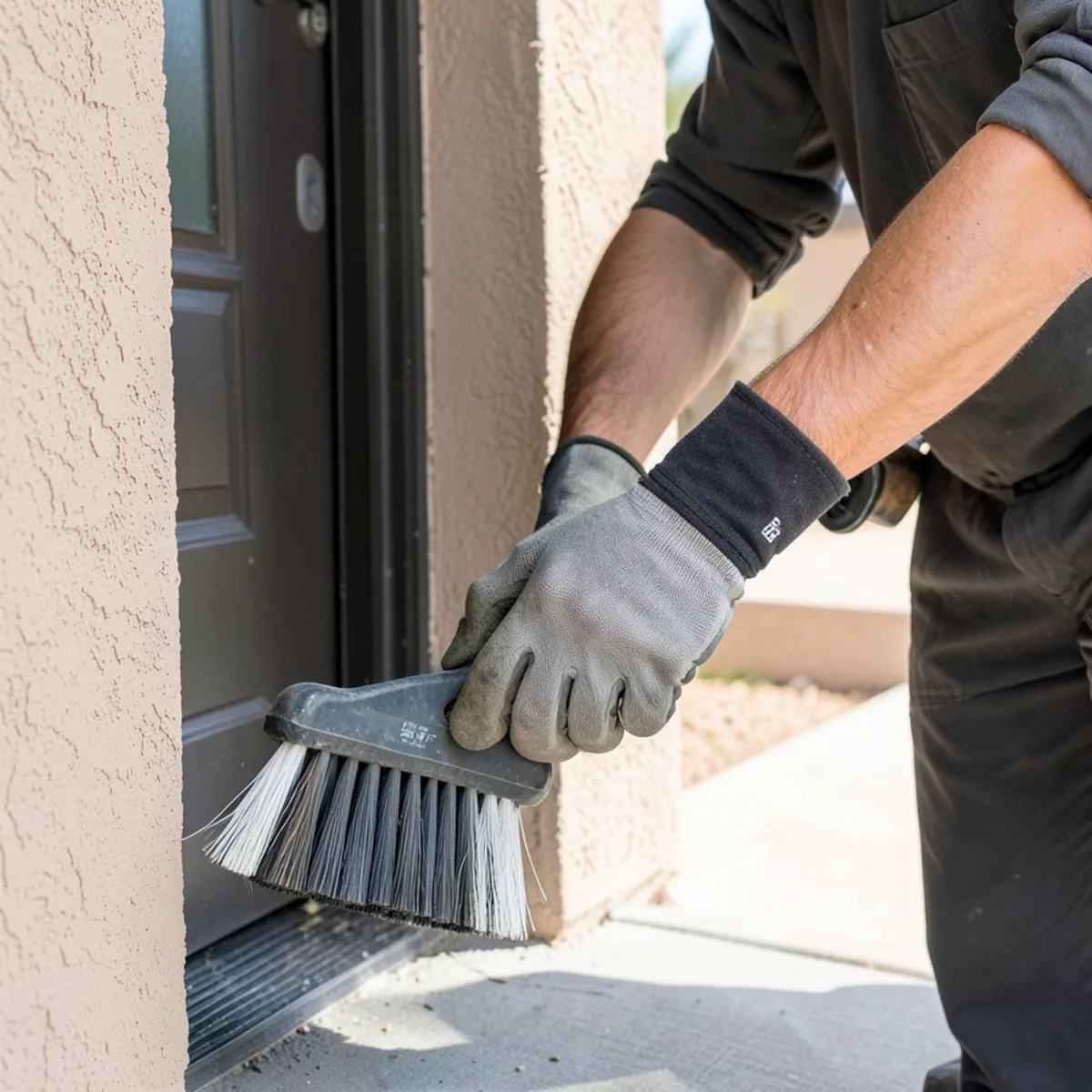
If you are paying for monthly and still finding scorpions, spend effort on the structure before adding visits:
- Fit tight door sweeps and weatherstripping.
- Screen weep holes with coarse mesh. Do not plug them, since they vent the wall.
- Caulk around pipes and other wall penetrations.
- Trim plants and branches off the roof and walls.
How Kai sets a schedule
Customers describe monthly service, and one has Kai out every two months. Reviews also mention inside and outside treatment, a reminder the day before and, on monthly plans, a written chemical list. If you want a different interval, ask him on the phone what would suit the home. He would rather tell you honestly than sell you a visit you do not need, which fits the "no sales gimmick" line on his business profile.
Cost depends on home size, lot size, what is being treated, how much pressure the property has and how far it sits from Tempe. So compare total yearly cost, not price per visit. One Yelp reviewer called it "no long term contract," but check current terms with him directly.
This applies across the Valley, from homes close to the base in Tempe to Chandler. If you want a straight answer about your own home, call (209) 563-1650.
Sources
- University of Arizona Cooperative Extension: Scorpions of the Desert Southwest United States (AZ1768)
- National Pesticide Information Center: Pesticide Half-life
- University of Arizona Cooperative Extension: Pest-Proofing Your Home (AZ1677)
- EPA: Integrated Pest Management Principles
- Maricopa County: Vector Control Roof Rats FAQ
- University of Arizona Cooperative Extension: Wild Honey Bees in Community Environments (AZ1846)
About the author
Kai Horner owns and runs Kekoa Pest Control, a family-owned pest and weed control business based in Tempe, AZ, serving the East Valley since 2022. More about Kai