
Bee & Wasp Removal · By Kai Horner, owner of Kekoa Pest Control · Published · Updated
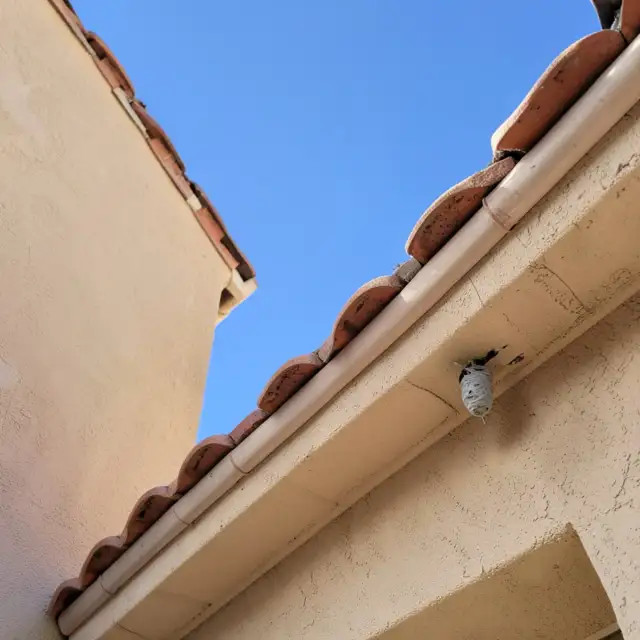
A wasp colony starts with one queen and a nest the size of a coin. University of Arizona material on stinging pests says most trouble arrives in late summer and fall, when nests are large and wasps defend them harder. So the work belongs months earlier. Our bee and wasp removal page covers what to do once a nest is already big. This post is about never getting there.
One fair point first: University of Arizona Extension treats paper wasps as beneficial, because they feed on caterpillars and other insects. A nest in a far corner of the yard can often be left alone. The goal is keeping them away from doors, patios, pool gates and anywhere kids and pets go.
How to prevent wasps from nesting, season by season
| Season | What wasps are doing | Your job |
|---|---|---|
| Winter | The old colony has died out. Old nests hang empty. | Remove old nests, wash the spot, seal gaps. |
| Late winter to spring | Queens look for sheltered places to start. | Walk the house every week or two. Knock down starters. |
| Early summer | Workers hatch and the colony grows. | Keep checking. Fix drips. Treat anything by a door as urgent. |
| Late summer to fall | Nests peak and defense is highest. | Leave big nests alone and call for help. |
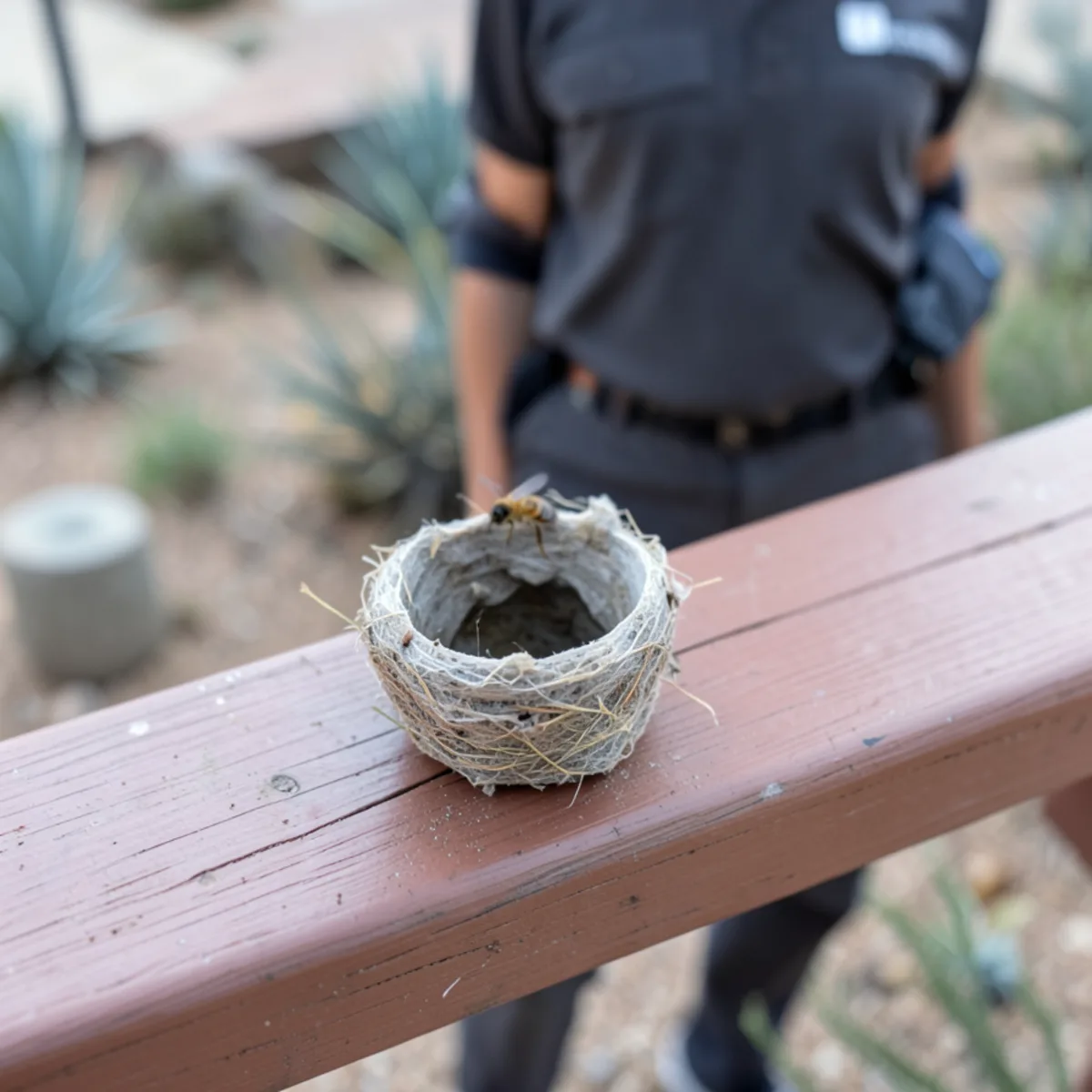
The spring walk matters more than anything else on this table. A starter nest has a single queen on it. Later the same nest can have dozens of defenders.
The spring walk: where to look on a Valley house
Paper wasps want a dry ceiling and a bit of shade. On a typical block-and-stucco home, that means:
- Under eaves and soffits, especially on the shaded north and east sides.
- Patio covers, ramada beams and pergola joints.
- Door and window frames, light fixtures and doorbell housings.
- Gate latches, block-wall caps and the undersides of pool equipment covers.
- Inside grills, irrigation boxes and anything left unmoved since fall.
Walk it in the cool of the morning, when wasps are slow. Look up from a few feet back, not from right underneath.
Paper wasp, European paper wasp or yellowjacket?
The plan depends on which insect is building, and University of Arizona Extension gives clear marks for telling these three apart.
| Insect | How to spot it | Where it nests | Temper |
|---|---|---|---|
| Native paper wasp | Long hind legs, narrow waist | Open paper comb under eaves and in sheltered spots | Dive-bombs when the nest is approached |
| European paper wasp | Same build, yellow-orange antennae | Same habits as native paper wasps | Usually more aggressive than natives |
| Western yellowjacket | Sturdier, yellow and black | Usually an old burrow, sometimes a wall void | Comes out fast when the nest is disturbed |
All three can sting more than once, unlike a honey bee. The European paper wasp arrived in North America in the late 1970s and is now established across the country, so a door-frame nest that reacts faster than you expect may be one of these.
Water, food and the pool problem
Wasps need water to get through a dry summer. A pool or a dripping hose bib can draw them from well beyond your own lot. You cannot drain the pool, but you can take away the easy sources around it.
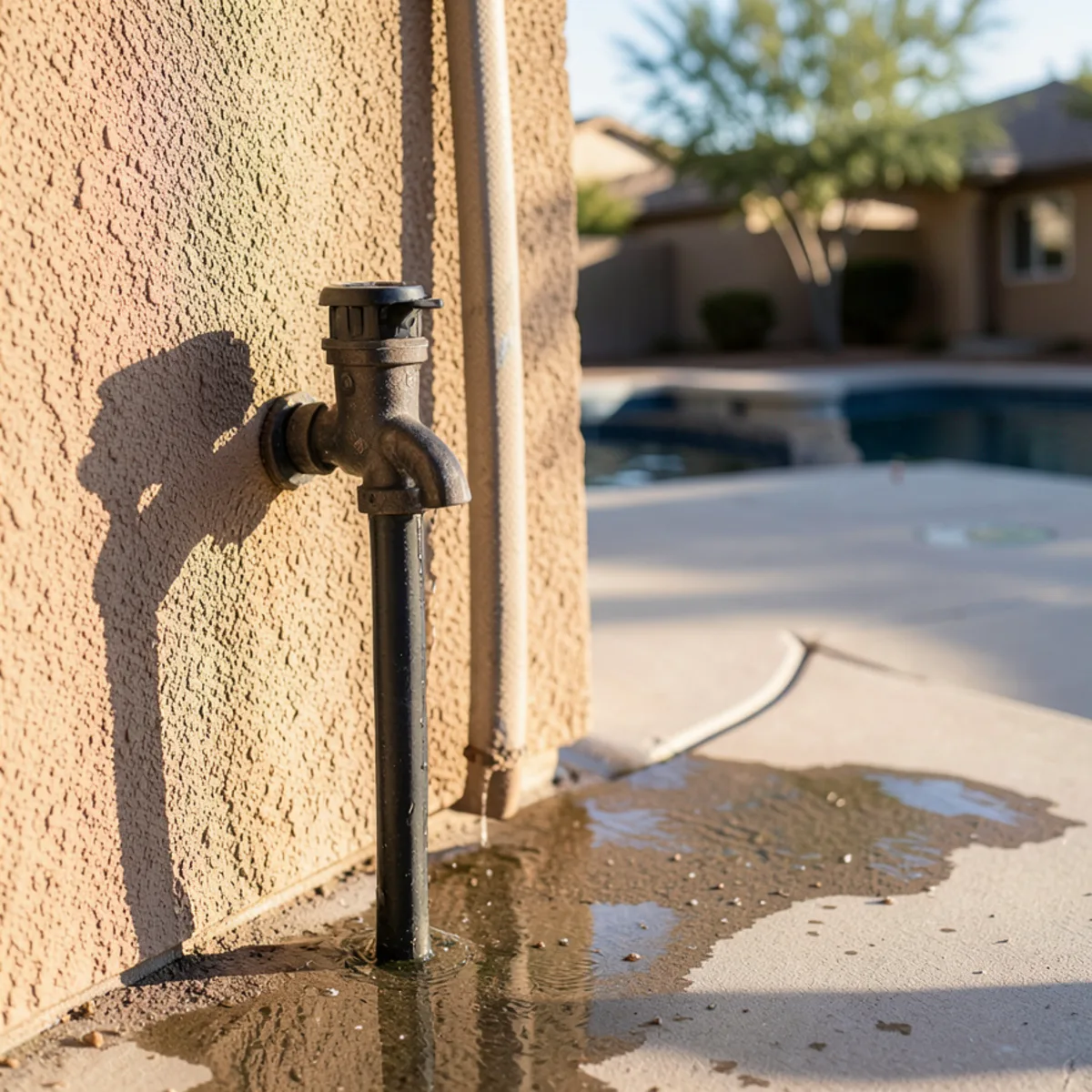
- Repair dripping hose bibs and leaking irrigation lines near the house.
- Clear the standing water under planters and AC lines.
- Keep trash lids shut. Extension notes yellowjackets gather around uncovered bins.
- Cover food and sweet drinks outdoors. Yellowjackets will crawl into open soda cans.
- Check ramadas and pool equipment close to the water first, since that is the short commute.
Yellowjackets need different handling from paper wasps. A steady stream of insects at one ground hole means keep people and mowers away, and leave it for someone with the right gear.
Taking down a starter nest
A nest on a far wall can stay. University of Arizona Extension says these insects should be tolerated where they pose no immediate threat. For a small nest by a door, its steps run like this.
- Check first that nobody involved has reacted badly to a sting. If anyone has, call instead.
- Choose an aerosol labeled for wasps, which sprays a stream up to 20 feet, and read the label.
- Go at night, after the wasps are back and quiet, in long sleeves, long pants, a hat and eye protection.
- Do not point a flashlight at the nest. Extension warns they will follow the beam to its source.
- Treat from a distance, then leave it until the adults are dead.
- Take the nest down and wash the spot with a jet of water.
- Check that spot again over the next few weeks.
A ladder changes the answer. Standing on one in the dark under a live nest is not a job worth saving money on.
What actually stops repeat nests
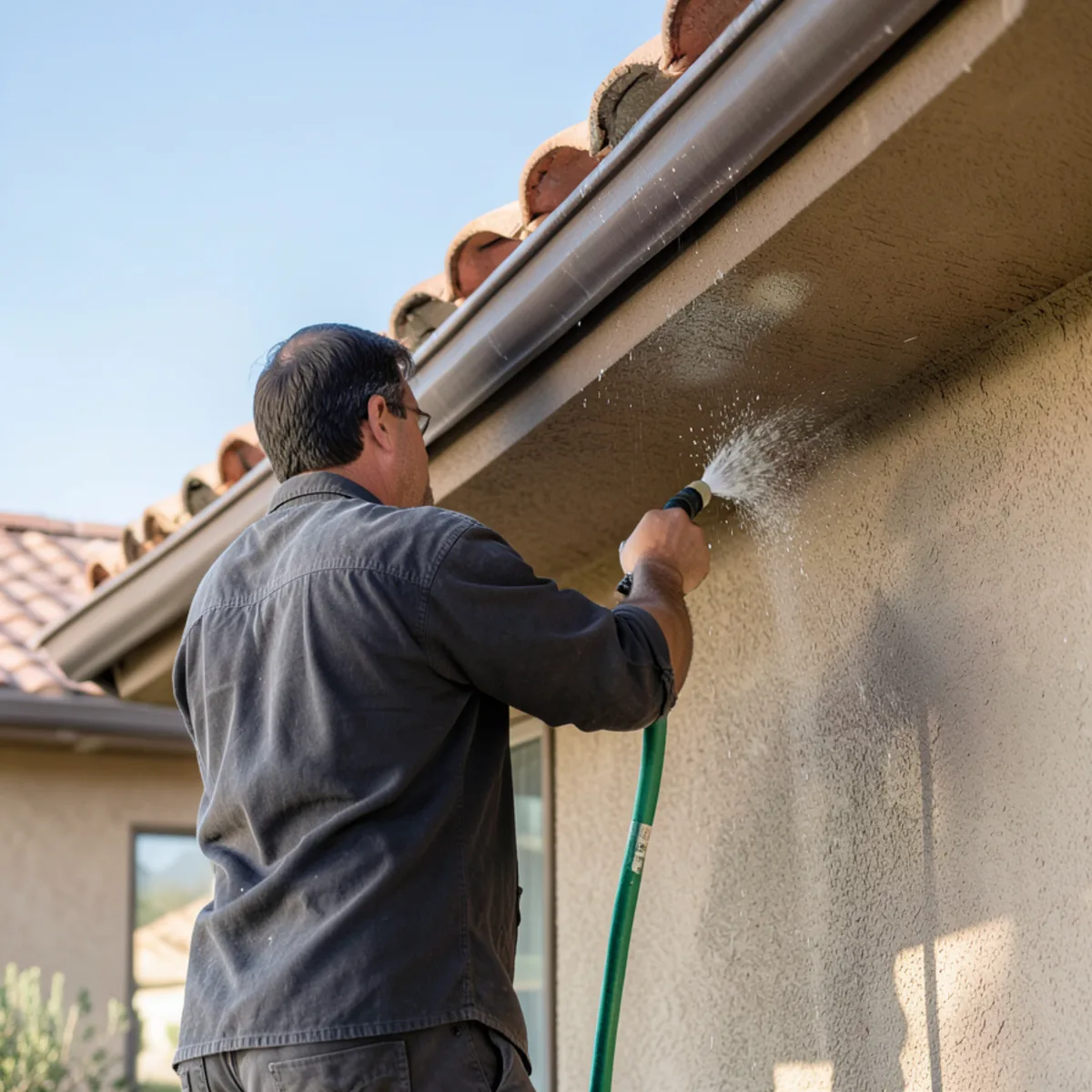
Wasps return to a good spot because it is still a good spot. University of Arizona Extension says paper wasps may build a new nest right beside an old one, and it advises hosing the spot hard once a nest is gone, to remove colony odors. Do that every time.
Then deal with the structure. Extension's pest-proofing guide calls for sealing cracks and gaps around windows, doors and fascia boards with an outdoor-rated sealant. Screen vents and keep screens repaired. Those fixes also stop other pests, so the time is not wasted on one insect. Prune vines and shrubs back so they do not make a hidden platform against the wall.
Remove old nests in winter, when the colony is dead and the work is calm. Extension says a nest posing no immediate threat can be left for the season and taken down then.
How Kai looks at a repeat wasp problem
The useful question is not only where the nest is. It is why this spot keeps getting picked. Kai looks at shelter, nearby water and how close the spot is to where people walk. Reviews note he talks through his work and prevention, so expect to hear what to change on the house as well as what he did to the nest.
There is also a trade-off in how hard to go after them. Paper wasps eat caterpillars and other garden insects, and Extension notes some gardeners put up nest boxes to attract them on purpose. Clearing every nest from a large lot costs time and product, and it removes something useful. Clearing the ones by the front door, pool gate and patio is the part that pays.
Be honest about limits. Nobody can keep every queen off a house, because she flies in from somewhere else. What you can do is make her attempts small and catch them early. Our wasp and hornet control page explains how a live nest gets handled, and how a visit works around Tempe and on the longer drive out to Fountain Hills, where homes sit close to open desert.
A stinging insect emergency is not a pest control call. If someone has trouble breathing or a serious reaction, call 911. Sting questions can go to Poison Help at 1-800-222-1222.
CDC's worker guidance fits a backyard too. Around one insect, stay calm and still, because swatting can provoke a sting. If several attack, get indoors or into shade and stay out of the pool. After a sting, it says to have someone stay with the person to watch for an allergic reaction, wash the site and use ice.
Already looking at a nest bigger than your fist? Leave it alone and call (209) 563-1650 for an honest answer on timing.
Sources
About the author
Kai Horner owns and runs Kekoa Pest Control, a family-owned pest and weed control business based in Tempe, AZ, serving the East Valley since 2022. More about Kai