
Weed Control · By Kai Horner, owner of Kekoa Pest Control · Published · Updated
Pre-emergent timing is the one weed job where the calendar beats the product. Apply it a little early and it sits ready. Apply it a little late and it does nothing for the plants already up. If you want the wider picture first, our weed control overview covers both kinds of treatment. This post covers the question of dates.
When to apply pre-emergent in Arizona's low desert
The Valley has two weed crops a year, so it has two windows.
| Window | Target | Examples | Timing |
|---|---|---|---|
| Early fall | Cool-season weeds | Mustards, mallow, burr clover, black medic | Before fall rains and cooling soil, roughly September into October |
| Late winter | Warm-season weeds | Southwest cupgrass, crabgrass, stinkgrass, spurge | By late February to early March |
The spring date is the better documented of the two. University of Arizona turf specialists say to apply when soil is around 50 to 55 degrees and, for Phoenix, by the end of February or early March. An older University of Arizona Turf Tips issue gave Phoenix a guide of February 25 to March 5, based on 50 degrees at a depth of two inches. AZMET weather stations publish soil temperatures if you want to check. The network includes Phoenix Encanto and Phoenix Greenway, and the column to read is soil temperature at 2 inches.
Watch out for dates written for somewhere else. The same Turf Tips issue shows how far they move across Arizona.
| Place | Suggested spring window |
|---|---|
| Yuma | February 10 to March 1 |
| Phoenix | February 25 to March 5 |
| Tucson | March 1 to 10 |
| Payson and Show Low | April 20 to May 5 |
| Flagstaff | May 1 to 15 |
A national lawn calendar or a relative's advice from Prescott can put you weeks behind a Valley yard.
The fall date comes from working backward. A University of Arizona IPM newsletter says low desert winter weeds emerge from late summer through winter. The barrier must be down first, so September into October is a sensible trade judgment, not a published date. A warm year can push it later, and an early wet spell can push it sooner.
How pre-emergent actually works
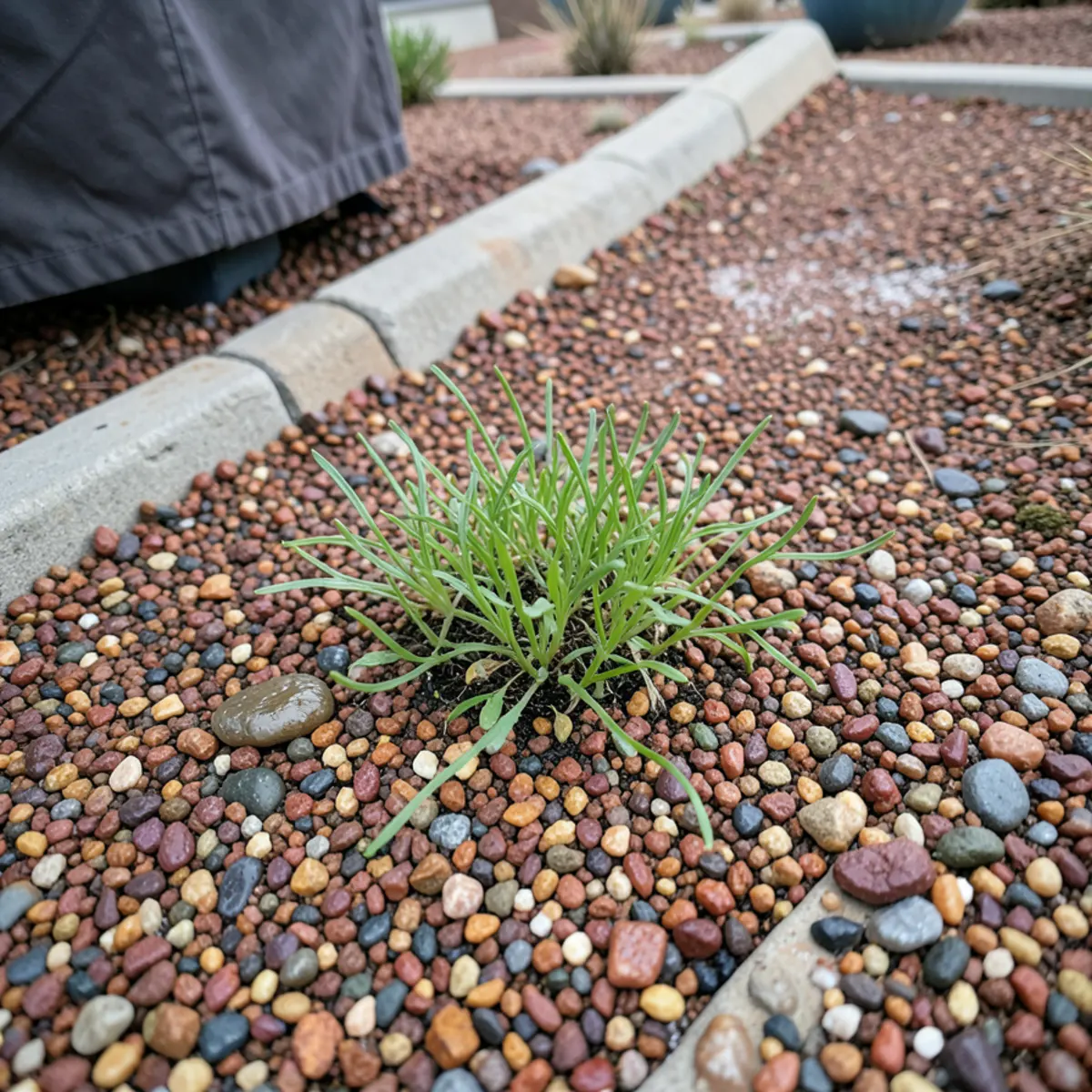
The name misleads people. University of Arizona turf guidance explains that these products let the seed germinate, then stop the young root from growing, so no shoot reaches the surface. Nothing happens to a weed that is already up.
Three things decide whether it holds.
- Even coverage. Most active ingredients move very little sideways after they are applied. Skip a strip and that strip will grow weeds.
- Water. Extension says the product must be watered in, by rain or irrigation, to activate it. Labels state a watering window, and missing it means losses to sunlight or air.
- Staying in the soil. Heat, moisture and microbial activity all reduce how long a product lasts once applied.
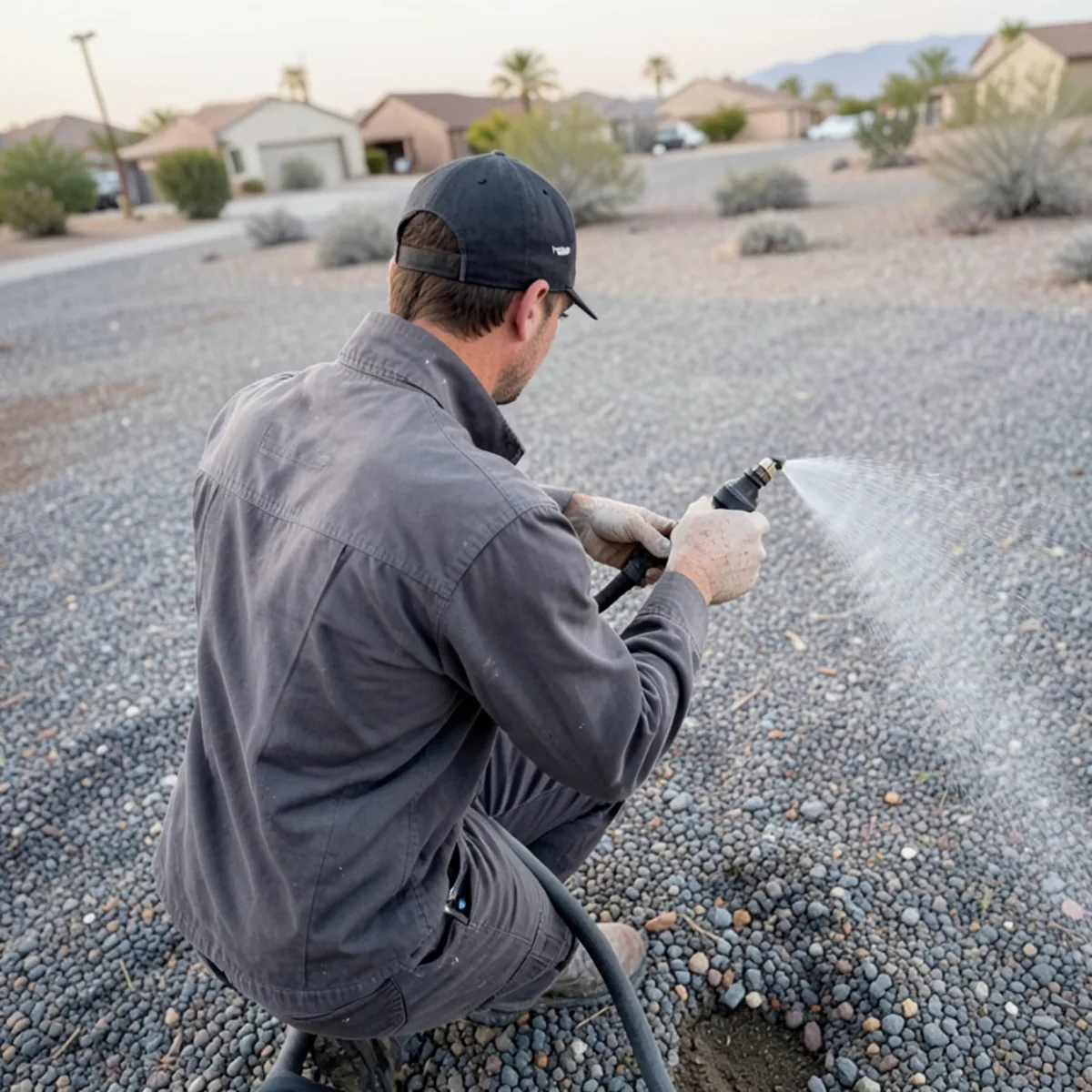
In a Valley yard, the water step is where things often go wrong. A gravel front yard on drip irrigation may not get any overhead water at all. If the forecast shows no rain, someone needs a plan for watering the treated area.
Which product, and how long it can sit dry
Products differ more than their packaging suggests. University of Arizona Turf Tips says the allowed gap before watering runs from 2 or 3 days up to 3 or 4 weeks. A few formulations can sit dry for about 21 days, while others must go in quickly. Weed-and-feed products should be watered in the same day.
Two more points from the same turf guidance help at the shelf.
- The name is not the guide. A product name may not show whether it is a pre-emergent at all, so read the active ingredient and the label's use directions.
- Grass and broadleaf differ. Most common actives work mainly on grassy weeds. Spurge control usually takes the high label rate and a follow-up where the label allows it.
Lawns add one more check. Turf Tips warns that at least one active can damage ryegrass overseeded lawns, and it says to always check the label for turfgrass tolerance.
Why late applications fail
Late is the commonest fault, and it has a simple cause. Seedlings that have already rooted get past the treated layer. Once a yard is green, pre-emergent will not turn it brown.
Other common failures come from the same logic.
- Raking, digging or moving gravel after treatment, which disturbs the treated surface.
- Applying to a yard before a heavy storm, then getting wash-off down a slope.
- Spreading too thinly over a large lot.
- Expecting one fall application to last through summer.
- Treating before a landscaping project that disturbs the soil.
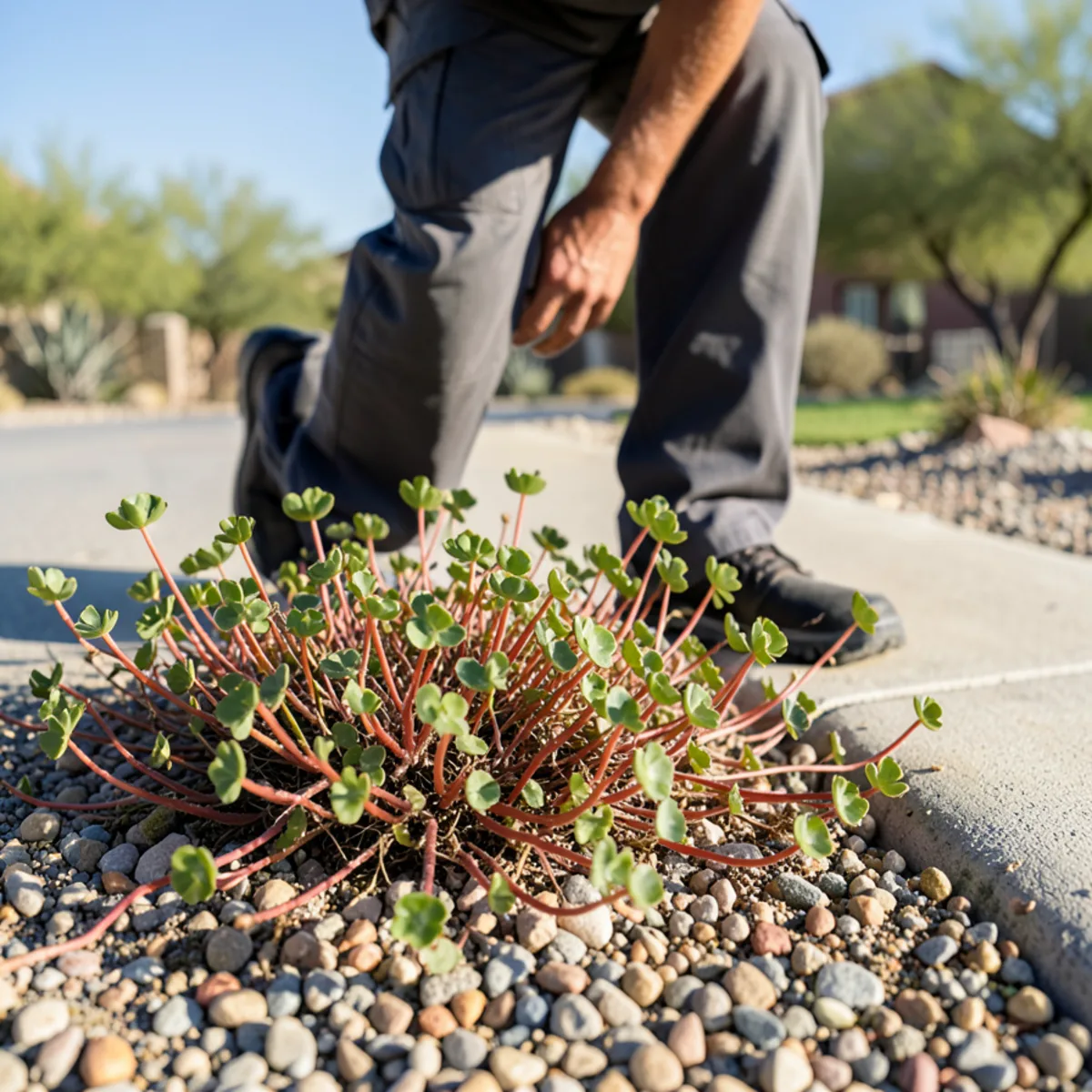
Summer brings a special case. Spurge germinates whenever air temperatures are above 60 degrees, so University of Arizona Extension suggests pre-emergent use in spring and again in mid-summer, according to label instructions. Monsoon weed control is really about that second pass, since rain sets off another flush of seed.
A simple Valley weed calendar
Use this as a starting point and follow the label on anything you apply.
- September to October. First pre-emergent pass, before fall rain and cooler soil.
- November to January. Spot-treat or hand-pull anything that got through.
- Mid to late February. Second pass, ahead of warm-season germination.
- March to May. Deal with survivors while they are small, before seed forms.
- June to July. Repeat for spurge and monsoon weeds if the label allows.
Keep products off vegetable beds. Extension says pre-emergent herbicides should not be applied to vegetable gardens, and new plantings and fresh seed deserve the same care. Read the label before you treat near them.
How Kai sets up pre-emergent for a yard
Customers report that Kai addresses weeds as well as pests, and one customer says he never fails to deal with both. For a yard, the thinking usually starts with what grew last year, because that tells you which window matters more.
Gravel yards, lawns and planted beds each behave differently, and that shapes what pre-emergent weed control can do for you. Tell him what the yard looked like last season, when it gets watered and what is going in or coming out soon.
Weed control sits under its own license category in Arizona, so anyone hiring for this work should confirm the category with the Arizona Department of Agriculture at opm.azda.gov/PCBusSearch.php.
There are real trade-offs in the timing. A barrier is paid for before there is anything to see, and in a dry year it can look as if nothing happened. Skip it, and you are spot-treating every flush after every storm. A yard that grew little last winter may not need the fall pass, while one covered in spurge last August usually earns the spring pass and the mid-summer repeat. Applying early carries less risk than applying late, because the product is waiting when seed starts, though coverage still fades with time.
Yards in Tempe and Gilbert share a calendar, though a lot with flood irrigation or heavy shade can run a little differently.
If it is coming up on a window and you would like the job off your list, call (209) 563-1650 and ask Kai how soon he can fit it in.
Sources
- University of Arizona Turf Tips: Basic Pre-emergence Weed Control in Lawns, February 2015
- University of Arizona Turf Tips, February 1997
- University of Arizona Turf Tips, January 1994
- University of Arizona Cooperative Extension: Preemergence Herbicides (2022)
- University of Arizona, AZMET weather network
- University of Arizona Extension, AZ1572: Managing Spurge in the Landscape, Garden and Turf
- University of Arizona IPM Newsletter: Spring Preemergence Weed Control in Lawns, March 2018
About the author
Kai Horner owns and runs Kekoa Pest Control, a family-owned pest and weed control business based in Tempe, AZ, serving the East Valley since 2022. More about Kai