
Emergency Pest Control · By Kai Horner, owner of Kekoa Pest Control · Published · Updated
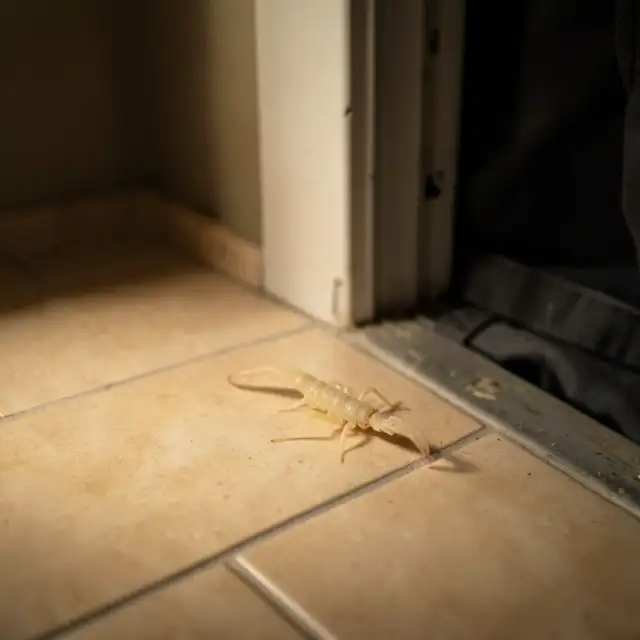
A scorpion on the bathroom wall at bedtime is a normal Valley problem, and it has a right order of steps. This guide covers the first half hour, the spots to check next, and when emergency pest control makes sense for a home in Tempe or Chandler.
What to do if you find a scorpion in your house
Work through these in order. The whole thing takes a few minutes.
- Check people first. If anyone was stung, or a small child is crying and cannot say why, skip to the sting section below.
- Keep it in sight. Bark scorpions slip into a crack quickly. Have someone else fetch the jar so you do not lose it.
- Clear the room. Shut kids and pets out and put on closed shoes.
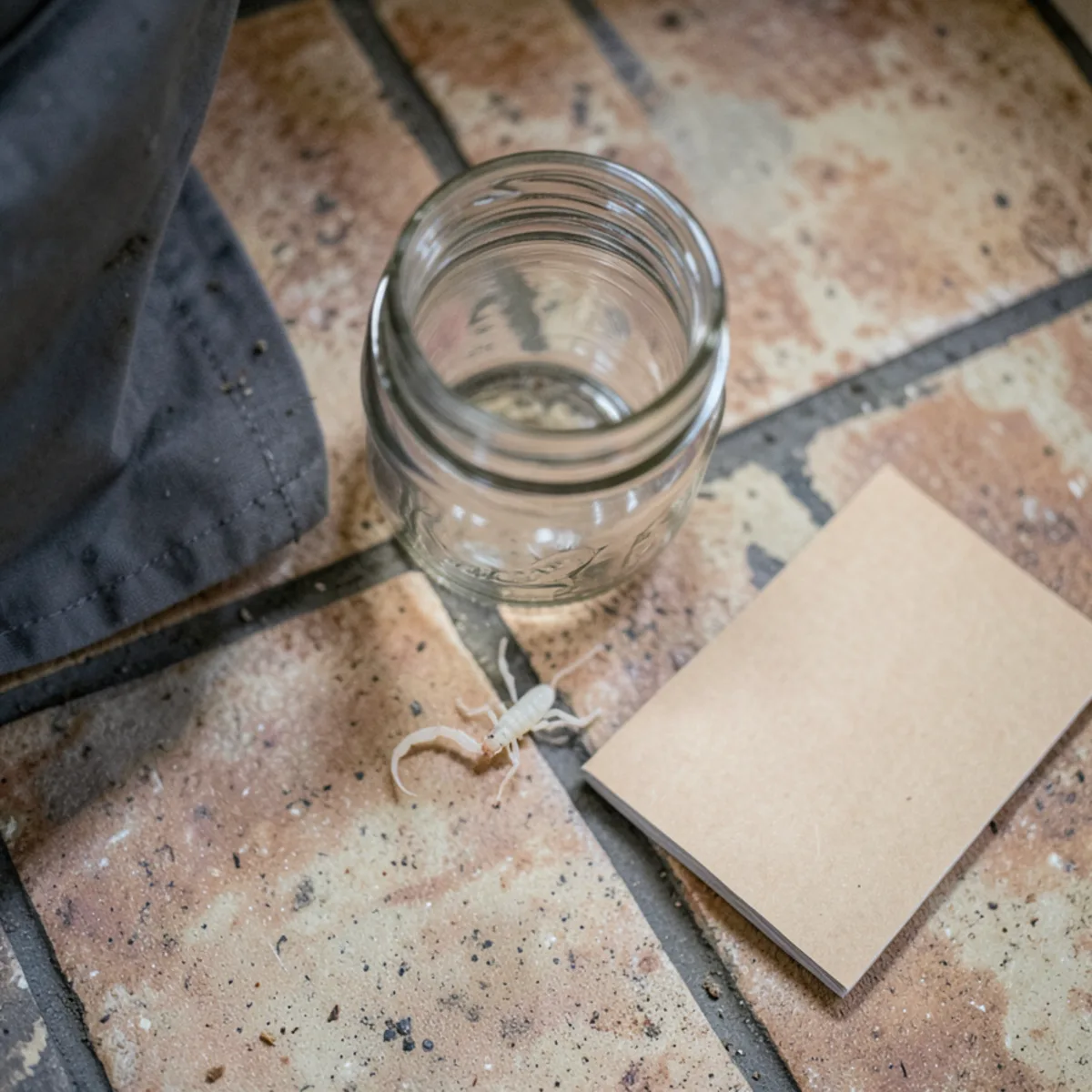
- Trap it. Set a wide glass jar over it, slide stiff card underneath, and tip the jar upright with the lid on. Long tongs also work. University of Arizona Extension suggests boots and long tongs for scorpion collecting.
- Never use bare hands or feet. Most stings happen when a scorpion is grabbed, crushed against the body or stepped on.
- Photograph it next to a coin. A clear picture settles the species question.
Is it really a bark scorpion?
Size is a poor guide, since the university gives 0.25 to 3 inches for this species. Shape tells you more. Look at the pincers and tail.
| Feature | Bark scorpion | Stripe-tailed or ground scorpion |
|---|---|---|
| Pincers | Slender | Bulkier, or a wider tail on ground species |
| Tail | Long and thin | Thick and heavy |
| Where seen | Walls, ceilings, sinks, tubs | Under objects, short burrows on sandy soil |
| Medical concern | Yes, the only U.S. species | Venom relatively mild |
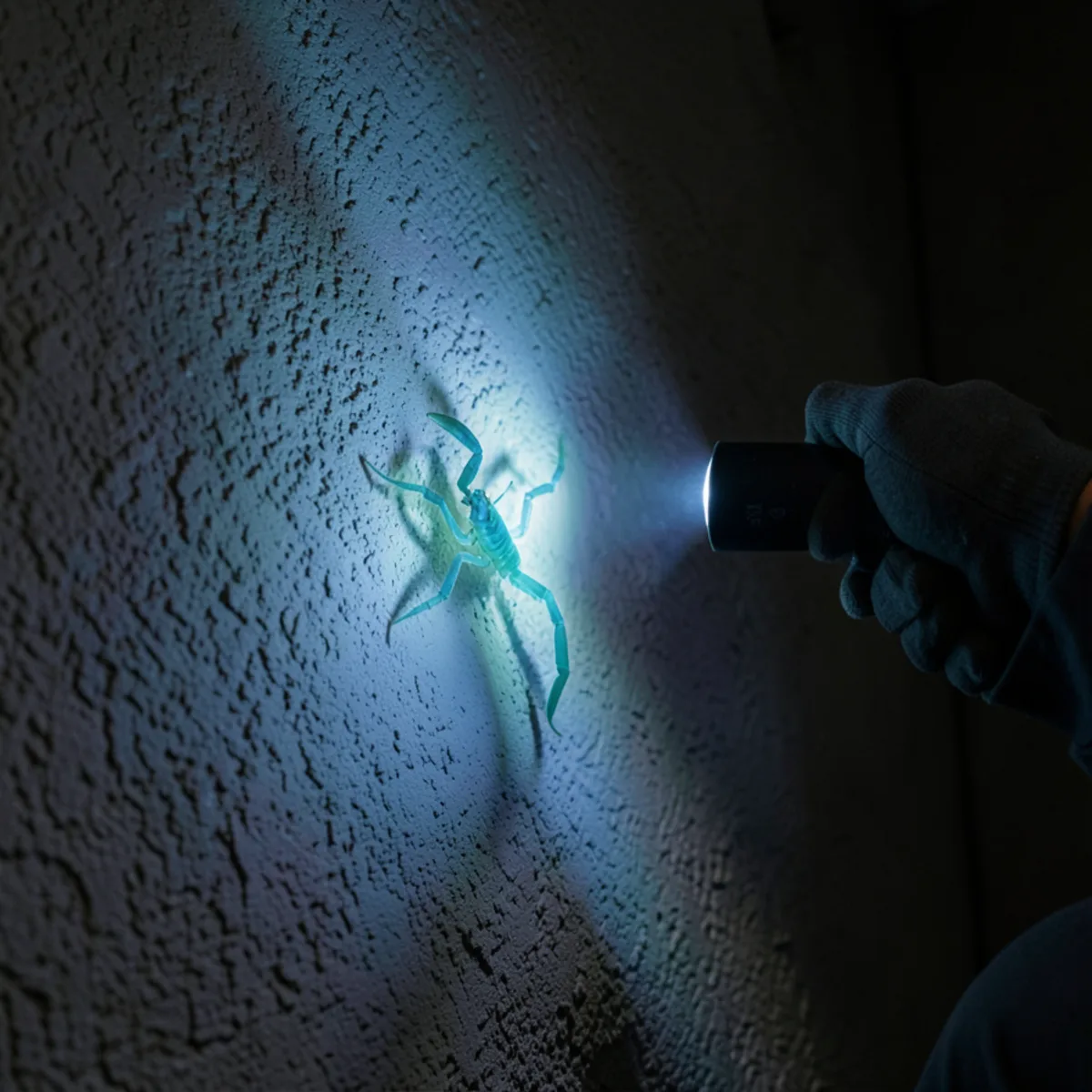
Bark scorpions are also the climbers. If yours was on a wall or ceiling, assume bark scorpion and act accordingly. All Arizona scorpions fluoresce under a UV flashlight, so the glow does not identify the species, but it does find them.
If someone was stung, call before you do anything else
Medical advice here belongs to the people trained for it. Poison Help is reached at 1-800-222-1222, and a specialist will review the symptoms and advise home care or the emergency room. University of Arizona Extension reports about 90 percent of sting exposures called in to Arizona's poison center are treated at home.
The same publication is firm about young children. A child 9 or under, or under 70 pounds, should get 911, Poison Help or the nearest hospital immediately. It also tells caregivers to treat stings to anyone with hypertension as serious, and lists loss of muscle control, roving eyes, slurred speech and trouble breathing as warning signs. Those are reasons to call 911 now, not to read further.
Poison Help's first-aid steps, as printed by the university, are soap and water, a cool compress on and off for ten minutes at a time, and resting the limb.
The university says symptoms generally develop within 20 minutes and can keep worsening through the first 4 hours, and that healthy adults should still call because each person responds differently. In young children it lists screaming, crying, holding a stung hand or foot, twitching muscles, flailing limbs and erratic eye movement. It also says pets are at risk, so phone your vet if a dog or cat has been playing with one.
Where to look next, room by room
One scorpion rarely tells you the whole story, so spend ten minutes checking the places they end up. Use a UV flashlight if you own one. Bark scorpions move most between about 7 and 11 p.m., and again from 3 a.m. to sunrise, so those are the productive hours.
- Beds. They can drop from ceilings onto bedding, so shake covers and look along the frame.
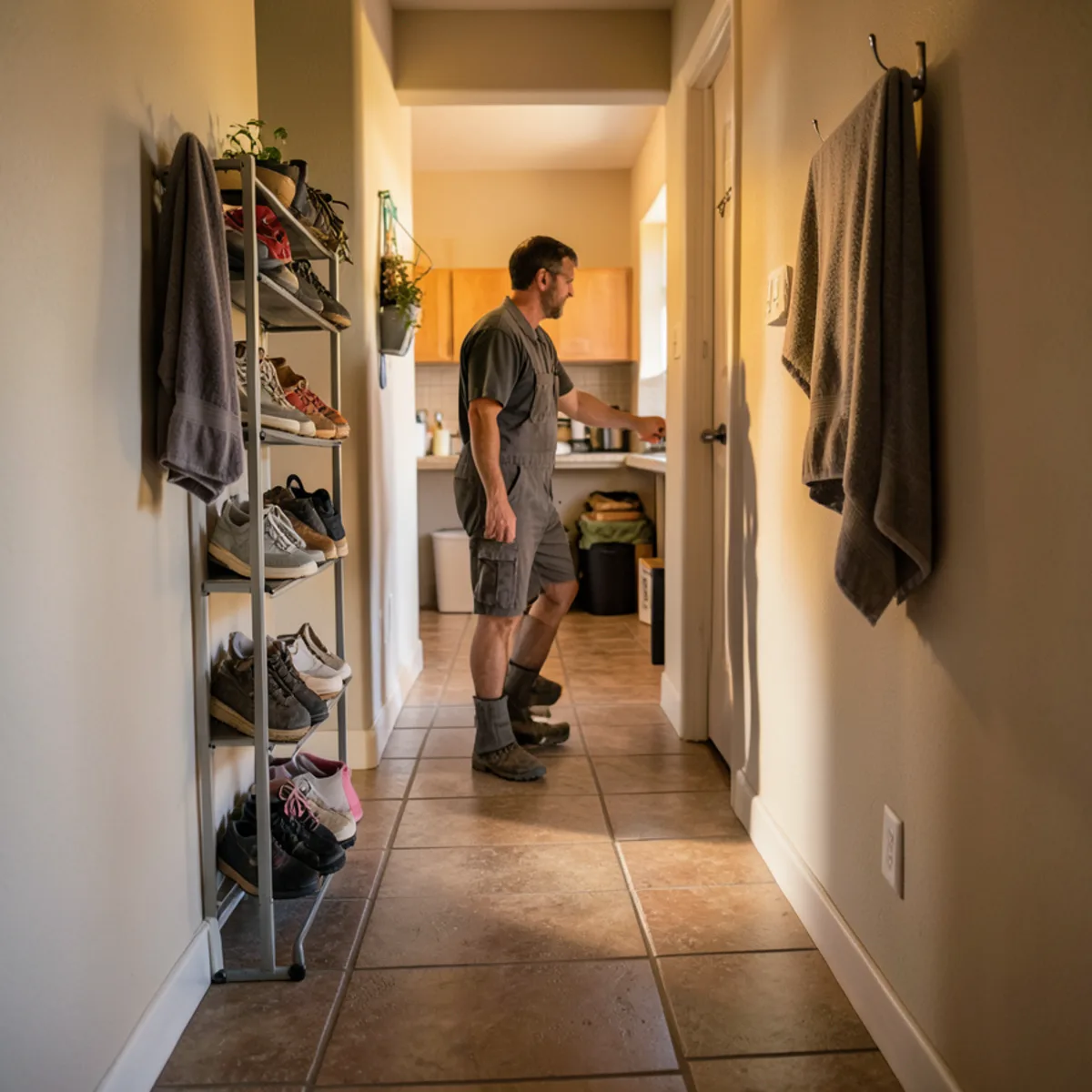
- Shoes and slippers. Tap them out and store them off the floor from now on.
- Towels and laundry. Damp towels left on a floor attract scorpions looking for moisture.
- Sinks, tubs and toilets. Smooth sides trap them after a fall.
- Door thresholds. Look for daylight under the door and worn weather-stripping.
- Faceplates and pipe collars. Once in a wall void, scorpions use these gaps to reach rooms.
How did it get inside?
Scorpions get in through small, ordinary gaps. University of Arizona Extension names poorly fitted doorways, window vents, openings under exterior walls, and weep holes in the weep screed. Screen weep holes with coarse steel mesh rather than plugging them, because they ventilate the wall.
Water and disturbance move them too. Irrigation or a monsoon can flood them out of a refuge, and earthwork in a yard can send them looking for new cover. A sighting the week after landscaping work or a hard rain has an obvious explanation. Sightings that keep coming do not, and they deserve a closer look at scorpion control around the whole property.
Distance narrows the search. Tracking work reported by the university puts typical foraging around buildings at under 35 yards a night, often just far enough to reach water or shelter. So the one on your tile most likely spent the day close by, in a wall void, a block wall or the yard. Males tend to roam further than females, and pregnant females move least.
The next seven nights: what to watch and write down
One week of notes tells you more than one frightening evening. Keep this routine going in the room where it turned up and in every room where someone sleeps.
- Bedtime UV sweep. The university suggests a UV light indoors before bed. Run it along baseboards, behind the headboard and into ceiling corners.
- Slippers after dark. The same guidance says to wear slippers or flip-flops indoors at night.
- Pool towels and clothes up. A scorpion in the washer or dryer usually rode in on laundry left on the floor.
- The daylight door test. Close each outside door and look at floor level from inside. The Extension standard is no outside light showing.
- Crib legs. Pull the crib from the wall and stand its legs in clean, wide-mouthed glass jars. The university says scorpions cannot climb clean glass.
- A plain log. Note the date, time, room and spot for every sighting.
The log is what turns a scare into a decision. Nothing further after a door fix suggests a wanderer. Several in one room, or along one wall, gives you a route to go and look at.
How Kai approaches a scorpion call
The honest starting point is that nobody can promise a scorpion-free yard in the low desert. The university says as much. Kai's view is that the useful questions are simple ones. Where was it found, how many have you seen, and what changed recently around the house? Those answers separate a one-off from a source in a block wall or a gap at a door.
A single sighting often points at a door sweep before it points at a spray, and that is cheap to find out first. Nobody should sell you a long plan off one scorpion. A repeat in a child's bedroom is another matter, and not something to sit on to save a call.
Customers describe him as someone who explains what he is doing and how to prevent problems, and who treats inside and out. A photo of what you trapped helps on that first call. If scorpions keep showing up, or a baby or an elderly relative sleeps in the affected room, ask about emergency scorpion treatment. Kai will give you a straight answer on when he can come.
Trapped one tonight and want it looked at? Keep the photo and call (209) 563-1650.
Sources
About the author
Kai Horner owns and runs Kekoa Pest Control, a family-owned pest and weed control business based in Tempe, AZ, serving the East Valley since 2022. More about Kai